CAS 5691-20-3
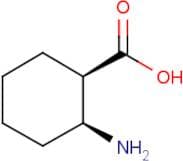
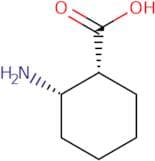
:(1R,2S)-2-aminocyclohexanecarboxylic acid
Description:
(1R,2S)-2-aminocyclohexanecarboxylic acid, commonly known as L-2-aminocyclohexanecarboxylic acid, is an amino acid characterized by its cyclohexane ring structure with an amino group and a carboxylic acid functional group. This compound is a chiral molecule, possessing two stereocenters, which contributes to its specific optical activity. It is typically found in its L-form, which is biologically relevant and can be involved in various biochemical processes. The presence of the amino and carboxylic acid groups allows it to participate in peptide bond formation, making it significant in protein synthesis. Additionally, its cyclohexane ring provides a unique steric environment that can influence its interactions with enzymes and receptors. This compound is soluble in water and exhibits typical amino acid behavior, such as zwitterionic properties at physiological pH. Its applications may extend to pharmaceuticals, where it can serve as a building block for drug synthesis or as a potential therapeutic agent due to its structural characteristics.
Formula:C7H13NO2
InChI:InChI=1/C7H13NO2/c8-6-4-2-1-3-5(6)7(9)10/h5-6H,1-4,8H2,(H,9,10)/t5-,6+/m1/s1
Sort by
Purity (%)
0
100
|
0
|
50
|
90
|
95
|
100
Found 4 products.
Cyclohexanecarboxylic acid, 2-amino-, (1R,2S)-rel-
CAS:Formula:C7H13NO2Purity:95%Color and Shape:SolidMolecular weight:143.1836cis-2-Amino-1-cyclohexanecarboxylic acid
CAS:cis-2-Amino-1-cyclohexanecarboxylic acidPurity:≥95%Molecular weight:143.18g/molcis-2-Amino-1-cyclohexane-carboxylic acid
CAS:Cis-2-Amino-1-cyclohexane-carboxylic acid (ACCA) is a β-amino acid that binds to peptides and cyclohexane rings. ACCA has been shown to have high resistance against denaturation, which may be due to its ability to form hydrogen bonds with water molecules. It also has an analog, cis-2-(aminomethyl)cyclohexanol (CAMCH), which is used in the treatment of Gram-positive bacterial infections. ACCA can be found in glycopeptide antibiotics such as vancomycin and teicoplanin, which are used for the treatment of resistant bacteria including methicillin resistant Staphylococcus aureus (MRSA).
Formula:C7H13NO2Purity:Min. 95%Color and Shape:PowderMolecular weight:143.18 g/mol