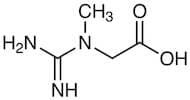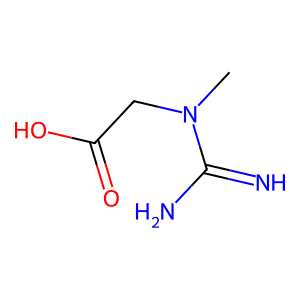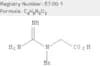
CAS 57-00-1
:Creatine
Description:
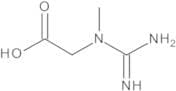
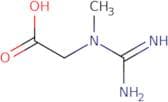
Creatine is a nitrogenous organic acid that plays a crucial role in energy metabolism, particularly in muscle cells. It is composed of three amino acids: arginine, glycine, and methionine. Creatine is primarily found in vertebrates and is synthesized in the liver, kidneys, and pancreas. In its pure form, creatine appears as a white, crystalline powder that is odorless and has a slightly bitter taste. It is soluble in water, although its solubility can vary with temperature. Creatine functions as a high-energy phosphate donor, facilitating the rapid regeneration of adenosine triphosphate (ATP) during short bursts of intense physical activity. This property makes it popular as a dietary supplement among athletes and bodybuilders to enhance performance and muscle mass. Creatine is generally considered safe for consumption when used appropriately, but excessive intake can lead to potential side effects, including gastrointestinal discomfort and dehydration. Its chemical formula is C4H9N3O2, and it is classified as a non-essential nutrient, meaning the body can produce it from other compounds.
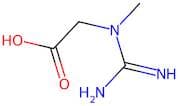
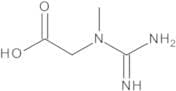
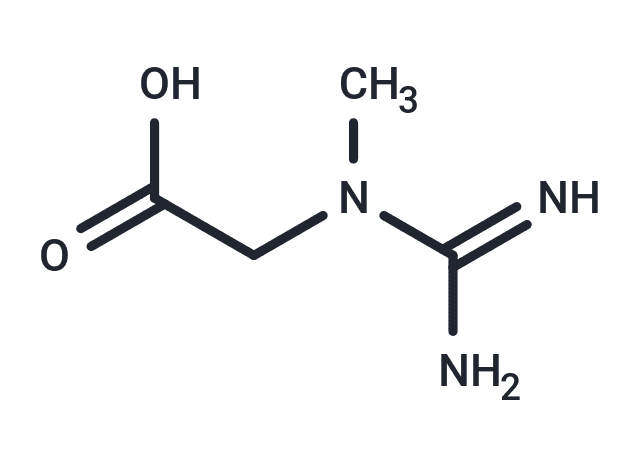
Formula:C4H9N3O2
InChI:InChI=1S/C4H9N3O2/c1-7(4(5)6)2-3(8)9/h2H2,1H3,(H3,5,6)(H,8,9)
InChI key:InChIKey=CVSVTCORWBXHQV-UHFFFAOYSA-N
SMILES:N(CC(O)=O)(C(=N)N)C
Synonyms:- (1-Methylguanidino)acetic acid
- (N-Methyl-guanidino)-acetic acid
- 2-(1-Methylguanidino)acetic acid
- 2-(N-Methylcarbamimidamido)acetic acid
- 2-[(C-Azaniumylcarbonimidoyl)-methylamino]acetate
- 5-Chloro-2-Maino Benzotrifluoride
- Cosmocair C 100
- Creatine anhydrous
- Creatine preparation
- Glycine, N-(aminoiminomethyl)-N-methyl-
- Kre-Alkalyn
- Methylguanidoacetic acid
- N-(Aminoiminomethyl)-N-methylglycine
- N-Amidinosarkosin
- N-Methyl-N-guanylglycine
- N-amidinosarcosina
- N-amidinosarcosine
- N-carbamimidoyl-N-methylglycine
- Neotine
- Nsc 8752
- Phosphagen
- Tego Cosmo C 100
- Vitargo
- [N-(Amidino)-N-methylamino]acetic acid
- See more synonyms
Sort by
Purity (%)
0
100
|
0
|
50
|
90
|
95
|
100
Found 15 products.
Creatine
CAS:Formula:C4H9N3O2Purity:>98.0%(T)(HPLC)Color and Shape:White to Almost white powder to crystalMolecular weight:131.14Creatine, anhydrous, 98%
CAS:Creatine is involved in the rapid production of ATP associated with creatine kinases in skeletal muscle tissue. Creatine may be used as a supplement to study its mechanism of action. It acts as a nutraceutical and a neuroprotective agent. This Thermo Scientific Chemicals brand product was originallyFormula:C4H9N3O2Purity:98%Color and Shape:White, PowderMolecular weight:131.14Glycine, N-(aminoiminomethyl)-N-methyl-
CAS:Formula:C4H9N3O2Purity:95%Color and Shape:SolidMolecular weight:131.1332Creatine, anhydrous
CAS:Formula:C4H9N3O2Purity:≥ 98.0%Color and Shape:White to almost white powderMolecular weight:131.13Creatine
CAS:Creatine, an amino acid in vertebrates, forms phosphocreatine in muscle, aids energy transfer, is made in the liver, and mainly stored in muscles.Formula:C4H9N3O2Purity:99.63% - 99.83%Color and Shape:Colourless To Light Yellow SolidMolecular weight:131.13Creatine
CAS:Applications Creatine can be used in biological study of high fat diets with different ketogenic ratios on hippocampal accumulation of creatine.
References Skoczen, A., et al.: Spectrochim Acta A, 184, 13 (2017)Formula:C4H9N3O2Color and Shape:NeatMolecular weight:131.13Creatine, anhydrous
CAS:Creatine is a basic protein that is used in the production of adenosine triphosphate (ATP) in muscle and other tissues. Creatine has been shown to have inhibitory properties against ubiquitin ligases, which are proteins that regulate protein degradation by marking them for cellular destruction. Creatine also has been shown to have protective effects against oxidative injury in the bowel, as well as inhibitory properties against neuronal death induced by anoxia or oxidative stress. Creatine can be found at physiological levels in human serum and mitochondrial membranes and has been shown to increase mitochondrial membrane potential, enzyme activities, and ATP production. Creatine may be involved in transfer reactions such as phosphocreatine synthesis from creatine.Formula:C4H9N3O2Purity:Min. 95%Color and Shape:PowderMolecular weight:131.13 g/molCreatine zinc chloride
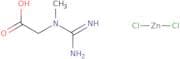
CAS:Creatine zinc chloride is a basic protein that is metabolized to creatinine and guanidinoacetate. Creatine zinc chloride has been shown to inhibit the mitochondrial membrane potential, leading to the inhibition of cardiac muscle contraction and myocardial infarct size. Creatine zinc chloride also has physiological functions in energy metabolism, cytosolic calcium regulation, and glomerular filtration rate. Creatine zinc chloride may be used for the treatment of metabolic disorders, such as obesity and diabetes mellitus type II.
Formula:C4H9N3O2·ZnCl2Purity:Min. 99%Color and Shape:PowderMolecular weight:267.43 g/mol