CAS 57-04-5
:Dihydroxyacetone phosphate
Description:
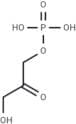
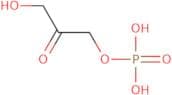
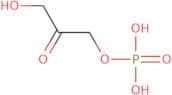
Dihydroxyacetone phosphate (DHAP) is a key intermediate in carbohydrate metabolism, particularly in the glycolytic pathway and the Calvin cycle. It is a phosphorylated three-carbon sugar and exists as a colorless, hygroscopic solid at room temperature. DHAP is an important molecule in the interconversion of carbohydrates, as it can be readily converted to glyceraldehyde 3-phosphate, another crucial metabolite. The compound is soluble in water, which facilitates its role in metabolic processes. DHAP plays a significant role in energy production and is involved in the synthesis of triglycerides and phospholipids. Its structure features two hydroxyl groups and a phosphate group, contributing to its reactivity and function in biochemical pathways. Additionally, DHAP is utilized in various biochemical assays and research applications, particularly in studies related to metabolism and enzymatic activity. Due to its central role in metabolism, understanding DHAP's characteristics is essential for insights into energy production and carbohydrate utilization in living organisms.
Formula:C3H7O6P
InChI:InChI=1S/C3H7O6P/c4-1-3(5)2-9-10(6,7)8/h4H,1-2H2,(H2,6,7,8)
InChI key:InChIKey=GNGACRATGGDKBX-UHFFFAOYSA-N
SMILES:C(C(CO)=O)OP(=O)(O)O
Synonyms:- (3-Hydroxy-2-oxopropoxy)phosphonic acid
- 1,3-Dihydroxy-2-propanone phosphate
- 1,3-Dihydroxyacetone 1-phosphate
- 1-Hydroxy-2-Oxopropyl Phosphate
- 1-Hydroxy-3-(phosphonooxy)-2-propanone
- 1-Hydroxy-3-(phosphonooxy)aceton
- 2-Propanone, 1,3-dihydroxy-, mono(dihydrogen phosphate)
- 2-Propanone, 1,3-dihydroxy-, phosphate
- 2-Propanone, 1-hydroxy-3-(phosphonooxy)-
- 3-(Fosfonooxi)-1-Hidroxiacetona
- 3-Hydroxy-2-Oxopropyl Dihydrogen Phosphate
- Dhap
- Dihydroxyacetone 3-phosphate
- Dihydroxyacetone monophosphate
- Dihydroxyacetone phosphate
- Dioxyacetone phosphate
- Glycerone phosphate
- Phosphodioxyacetone
- Phosphoric acid, ester with 1,3-dihydroxy-2-propanone
- See more synonyms
Sort by
Purity (%)
0
100
|
0
|
50
|
90
|
95
|
100
Found 7 products.
Dihydroxyacetone phosphate
CAS:Dihydroxyacetone phosphate is a central metabolite in lipid biosynthesis and glycolysis, involved in Calvin cycle and affected by transaldolase deficiency.Formula:C3H7O6PPurity:99.9%Color and Shape:SolidMolecular weight:170.06Dihydroxyacetone Phosphate Lithium Salt (Technical Grade)
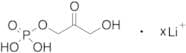
CAS:Controlled ProductFormula:C3H7O6P•xLiColor and Shape:Dark YellowMolecular weight:170.06694Dihydroxyacetone Phosphate Lithium Salt (>90%)
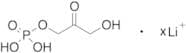
CAS:Controlled ProductStability Hygroscopic
Applications Dihydroxyacetone Phosphate Lithium Salt, is a metabolic intermediate involved in involved in a wide variety of metabolic pathways including glycolysis and lipid biosynthesis. In plants, Dihydroxyacetone phosphate is involved with the synthesis of vitamin B6.
References Jun Ogawa et. al.: et al.: Bioscience, biotechnology, and biochemistry, 67(4), undefined (2003-6-6); John P Richard, Biochemistry, 51(13), undefined (2012-3-14);Formula:C3H7O6P•xLiPurity:>90%Color and Shape:NeatMolecular weight:170.06694Glycerone phosphate lithium salt
CAS:Glycerone phosphate lithium salt is a reactive molecule that serves as an intermediate in the synthesis of rapamycin, a complex of glycerone phosphate and rapamycin. Glycerone phosphate lithium salt is used to detect the presence of glutamate dehydrogenase and to purify monoclonal antibodies. Glycerone phosphate lithium salt has been shown to react with platinum-based chemotherapy, which may be due to its ability to bind to active sites on cancer cells. This molecule also has been shown to reduce high cholesterol levels in mice and inhibit skin cancer tumor growth. Glycerone phosphate lithium salt's physiological effects have not been fully determined, but it may have some anticancer activity.Formula:C3H7O6P·xLiPurity:Min. 95%Molecular weight:170.06 g/molGlycerone phosphate hemimagnesium salt hydrate
CAS:Glycerone phosphate hemimagnesium salt hydrate is a substrate molecule that is used in the control analysis of dihydroxyacetone phosphate. Glycerone phosphate hemimagnesium salt hydrate is an optimum concentration for 3T3-L1 preadipocytes and has been shown to have an effect on energy metabolism. Glycerone phosphate hemimagnesium salt hydrate also has enzymatic activity, which can lead to neuronal death or skin cancer. This compound is a monosodium salt that can be found in cytosolic calcium, which is present in cells and helps regulate muscle contraction. Glycerone phosphate hemimagnesium salt hydrate can also be found in basic proteins that are vital for cell function.Formula:C3H5O6P·xH2OMgPurity:Min. 95 Area-%Color and Shape:PowderMolecular weight:180.19 g/molGlycerone phosphate
CAS:Glycerone phosphate is a cytosolic calcium (Ca2+) substrate molecule that is used to measure the activity of phospholipase A2, an enzyme that catalyzes the hydrolysis of membrane lipids. Glycerone phosphate has been shown to inhibit neuronal death and may be useful in treating neurodegenerative diseases such as Alzheimer's disease. Glycerone phosphate has also been shown to bind to monoclonal antibodies, which are proteins that bind specifically to antigens on the surface of cancer cells, thereby preventing them from binding to their corresponding receptors on healthy cells. This may limit the spread of tumor growth and increase their sensitivity to platinum-based chemotherapy.Formula:C3H7O6PPurity:Min. 95%Molecular weight:170.06 g/mol