CAS 5703-21-9
:3,4-Dimethoxybenzeneacetaldehyde
Description:
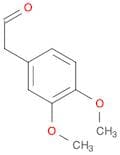
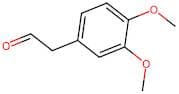
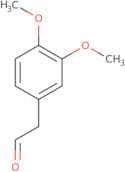
3,4-Dimethoxybenzeneacetaldehyde, also known as veratraldehyde, is an organic compound characterized by its aromatic structure featuring two methoxy groups (-OCH₃) attached to a benzene ring, along with an aldehyde functional group (-CHO) at the acetyl position. This compound typically appears as a colorless to pale yellow liquid with a sweet, pleasant odor reminiscent of vanilla or other floral notes. It is soluble in organic solvents such as ethanol and ether but has limited solubility in water. The presence of methoxy groups enhances its reactivity and influences its chemical properties, making it a valuable intermediate in organic synthesis, particularly in the production of fragrances and flavoring agents. Additionally, 3,4-Dimethoxybenzeneacetaldehyde can participate in various chemical reactions, including oxidation and condensation, which are essential in the development of more complex organic molecules. Safety precautions should be observed when handling this compound, as it may cause irritation to the skin and eyes.
Formula:C10H12O3
InChI:InChI=1S/C10H12O3/c1-12-9-4-3-8(5-6-11)7-10(9)13-2/h3-4,6-7H,5H2,1-2H3
InChI key:InChIKey=RIVVYJWUHXMGSK-UHFFFAOYSA-N
SMILES:O(C)C1=C(OC)C=CC(CC=O)=C1
Synonyms:- Homoveratraldehyde
- Homoveratrylaldehyde
- 3,4-Dimethoxybenzeneacetaldehyde
- Acetaldehyde, (3,4-dimethoxyphenyl)-
- Benzeneacetaldehyde, 3,4-dimethoxy-
Sort by
Purity (%)
0
100
|
0
|
50
|
90
|
95
|
100
Found 3 products.
3,4-Dimethoxybenzeneacetaldehyde
CAS:Formula:C10H12O3Purity:95%Color and Shape:LiquidMolecular weight:180.20052-(3,4-Dimethoxyphenyl)acetaldehyde
CAS:2-(3,4-Dimethoxyphenyl)acetaldehydePurity:95% (stabilized with Citric acid)Molecular weight:180.2g/mol2-(3,4-Dimethoxyphenyl)acetaldehyde
CAS:2-(3,4-Dimethoxyphenyl)acetaldehyde is a bioactive molecule that has shown anti-cancer properties in vitro and in vivo. It inhibits the activity of aldehyde dehydrogenase, an enzyme responsible for the oxidation of alcohols to aldehydes. This inhibition leads to accumulation of acetaldehyde in cells and induces apoptosis or cell death by caspase-independent mechanisms. 2-(3,4-Dimethoxyphenyl)acetaldehyde also has been shown to induce acidolysis reactions in the presence of acid. This reaction mechanism may be due to protonation of the phenolic hydroxyl group. The resulting 3,4-dimethoxyphenylacetic acid analog can inhibit cells' proliferation and induce apoptosis by blocking protein synthesis and cell division.
Formula:C10H12O3Purity:Min. 95%Color and Shape:Clear LiquidMolecular weight:180.2 g/mol