CAS 5703-94-6
:tetraethylene glycol monodecyl ether
Description:
Tetraethylene glycol monodecyl ether, with the CAS number 5703-94-6, is a nonionic surfactant characterized by its hydrophilic and lipophilic properties, making it useful in various applications. It is derived from tetraethylene glycol and a decyl alcohol, resulting in a structure that facilitates solubility in both water and organic solvents. This compound typically appears as a clear, viscous liquid and is known for its low toxicity and biodegradability, which makes it an environmentally friendly option in formulations. Its surfactant properties allow it to reduce surface tension, enhancing wetting, emulsification, and dispersion in formulations such as detergents, cosmetics, and pharmaceuticals. Additionally, tetraethylene glycol monodecyl ether exhibits good stability across a range of pH levels and temperatures, making it versatile for industrial applications. Its ability to form micelles also contributes to its effectiveness in solubilizing hydrophobic compounds, further expanding its utility in various chemical processes and formulations.
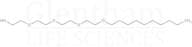
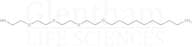
Formula:C18H38O5
InChI:InChI=1/C18H38O5/c1-2-3-4-5-6-7-8-9-11-20-13-15-22-17-18-23-16-14-21-12-10-19/h19H,2-18H2,1H3
SMILES:CCCCCCCCCCOCCOCCOCCOCCO
Synonyms:- Polyoxyethylene 4 Decyl Ether
- 3,6,9,12-Tetraoxadocosan-1-Ol
Sort by
Purity (%)
0
100
|
0
|
50
|
90
|
95
|
100
Found 6 products.
Tetraethylene glycol monodecyl ether, 98%
CAS:Formula:C18H38O5Purity:≥ 98.0%Color and Shape:Clear, colourless oily liquidMolecular weight:334.49Tetraethylene glycol monodecyl ether, 95%
CAS:Formula:C18H38O5Purity:≥ 95.0%Color and Shape:Clear, colourless liquidMolecular weight:334.49n-Decyltetraoxyethylene
CAS:N-Decyltetraoxyethylene is a fatty acid that can be synthesized by reacting naphthalene with ethylene oxide. It is used as a surfactant in pharmaceutical preparations and has been shown to have affinity for ligands such as anionic and cationic surfactants, fatty acids, and model proteins. N-Decyltetraoxyethylene also has antiviral properties, binding to influenza virus particles. This compound has been shown to exhibit bronchiolitis obliterans when administered to animals in vivo. The particle size of this compound is too small for it to be used as a respiratory inhalant drug, but the high surface area of the molecule allows it to be used as a nasal or eye drug.
Formula:C18H38O5Purity:Min. 95%Color and Shape:Clear LiquidMolecular weight:334.49 g/mol