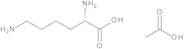
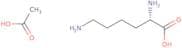
CAS 57282-49-2
:L-Lysine, acetate (1:1)
Description:
L-Lysine acetate (1:1) is a salt formed from the amino acid L-lysine and acetic acid. It is characterized by its role as a nutritional supplement and its importance in various biochemical processes. L-lysine is an essential amino acid, meaning it must be obtained through the diet, and is crucial for protein synthesis, hormone production, and enzyme function. The acetate component contributes to the solubility of the compound in water, making it suitable for various applications, including pharmaceuticals and food additives. L-Lysine acetate is typically used to support growth and development, particularly in animals, and may also have applications in human nutrition. The compound is generally considered safe when used appropriately, although excessive intake can lead to gastrointestinal disturbances. Its stability and compatibility with other substances make it a valuable ingredient in formulations. As with any chemical substance, proper handling and storage are essential to maintain its integrity and effectiveness.
Formula:C6H14N2O2·C2H4O2
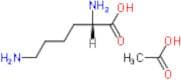
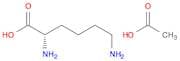
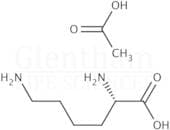
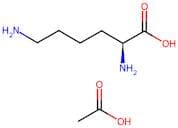
InChI:InChI=1S/C6H14N2O2.C2H4O2/c7-4-2-1-3-5(8)6(9)10;1-2(3)4/h5H,1-4,7-8H2,(H,9,10);1H3,(H,3,4)/t5-;/m0./s1
InChI key:InChIKey=RRNJROHIFSLGRA-JEDNCBNOSA-N
SMILES:C(C)(O)=O.[C@H](CCCCN)(C(O)=O)N
Synonyms:- (S)-2,6-Diaminohexanoic acid acetate salt
- <span class="text-smallcaps">L</span>-Lysine acetate
- <span class="text-smallcaps">L</span>-Lysine, acetate (1:1)
- <span class="text-smallcaps">L</span>-Lysine, monoacetate
- L-Lysine acetate salt
- L-Lysine monoacetate
- L-lysine Hac
- L-lysine acetate (1:1)
- Lysine monoacetate
- acetic acid, (2R)-2,6-diaminohexanoic acid
- L-Lysine acetate
Sort by
Purity (%)
0
100
|
0
|
50
|
90
|
95
|
100
Found 11 products.
L-Lysine Acetate
CAS:Lysine and its esters; salts thereofFormula:C6H14N2O2·C2H4O2Color and Shape:White Beige PowderMolecular weight:206.12666L-Lysine acetate salt
CAS:Formula:C6H14N2O2·C2H4O2Purity:≥ 98.0%Color and Shape:White to almost white powderMolecular weight:206.24L-Lysine acetate
CAS:Lysine acetate is a amino acid.Formula:C8H18N2O4Color and Shape:SolidMolecular weight:206.242L-Lysine acetate
CAS:L-Lysine acetateFormula:C6H14N2O2·CH3CO2HPurity:99.5%Color and Shape: white solidMolecular weight:206.24g/molL-Lysine acetate
CAS:Controlled ProductApplications L-Lysine acetate
Formula:C6H14N2O2·C2H4O2Color and Shape:NeatMolecular weight:206.24L-Lysine acetate
CAS:Controlled ProductL-Lysine acetate is a precursor of L-lysine and is used in the treatment of cancers. It has been shown to promote the growth of pluripotent cells, which can differentiate into any tissue type. L-Lysine acetate promotes cellular transformation by increasing the expression of growth factor-β1 in cells. This compound also enhances cellular physiology, energy metabolism, and protein degradation. L-Lysine acetate inhibits the ubiquitin ligases that are involved in protein degradation, leading to an increase in cell proliferation. The use of L-Lysine acetate has shown promising results for the treatment of infectious diseases such as HIV/AIDS and tuberculosis. L-Lysine acetate blocks the replication of human immunodeficiency virus (HIV) by inhibiting reverse transcriptase activity and blocking its DNA chain elongation process.Formula:C8H18N2O4Purity:Min. 95%Color and Shape:PowderMolecular weight:206.24 g/mol