CAS 57353-93-2
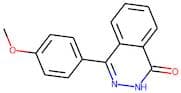
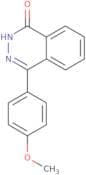
:4-(4-methoxyphenyl)phthalazin-1(2H)-one
Description:
4-(4-Methoxyphenyl)phthalazin-1(2H)-one, with the CAS number 57353-93-2, is a chemical compound characterized by its phthalazinone structure, which features a phthalazine ring system substituted with a methoxyphenyl group. This compound typically exhibits properties such as moderate solubility in organic solvents and limited solubility in water, which is common for many phthalazin derivatives. It may display biological activity, making it of interest in medicinal chemistry, particularly for its potential pharmacological properties. The presence of the methoxy group can influence its electronic properties and reactivity, potentially enhancing its lipophilicity and affecting its interaction with biological targets. Additionally, the compound may undergo various chemical reactions, including electrophilic substitutions and reductions, due to the functional groups present. Overall, 4-(4-methoxyphenyl)phthalazin-1(2H)-one represents a versatile scaffold for further chemical modifications and investigations in drug development and organic synthesis.
Formula:C15H12N2O2
InChI:InChI=1/C15H12N2O2/c1-19-11-8-6-10(7-9-11)14-12-4-2-3-5-13(12)15(18)17-16-14/h2-9H,1H3,(H,17,18)
SMILES:COc1ccc(cc1)c1c2ccccc2c(nn1)O
Synonyms:- 1(2H)-phthalazinone, 4-(4-methoxyphenyl)-
- 4-(4-Methoxyphenyl)phthalazin-1(2H)-one
Sort by
Purity (%)
0
100
|
0
|
50
|
90
|
95
|
100
Found 2 products.
4-(4-Methoxyphenyl)-1,2-dihydrophthalazin-1-one
CAS:4-(4-Methoxyphenyl)-1,2-dihydrophthalazin-1-onePurity:95%Molecular weight:252.27g/mol4-(4-Methoxyphenyl)-1-(2H)-phthalazinone
CAS:4-(4-Methoxyphenyl)-1-(2H)-phthalazinone is a hydrazine derivative that is used in the synthesis of other compounds. It is a colorless liquid with a pungent smell. It reacts with sodium ethoxide to form 4-methoxy-1,2-phenylenediamine, which condenses with ammonia and hydrochloric acid to form 4-amino-3-hydroxyphenylacetic acid hydrochloride. Hydrazines are reactive because they contain both a nitrogen and an oxygen atom in their formula. They are also nucleophiles because they can react with electron donating groups such as amines or alcohols. Hydrazides are less reactive than hydrazines because they lack the oxygen atom. The elemental analysis of this compound shows it contains carbon (C), hydrogen (H), and nitrogen (N).
Formula:C15H12N2O2Purity:Min. 95%Molecular weight:252.27 g/mol