CAS 57500-34-2
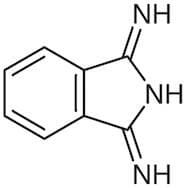
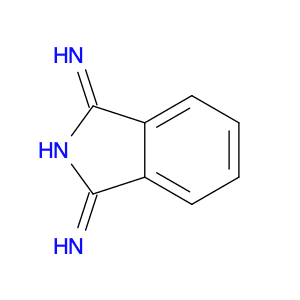
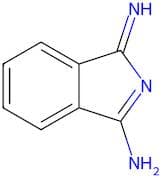
:3-amino-1-iminio-1H-isoindolium
Description:
3-Amino-1-iminio-1H-isoindolium, with the CAS number 57500-34-2, is a chemical compound characterized by its unique isoindole structure, which features a fused ring system. This compound contains an amino group (-NH2) and an iminium ion, contributing to its reactivity and potential applications in organic synthesis and medicinal chemistry. The presence of the iminium ion suggests that it may participate in various nucleophilic addition reactions, making it a valuable intermediate in the synthesis of more complex molecules. Additionally, the amino group can engage in hydrogen bonding and may influence the compound's solubility and interaction with biological systems. The compound's properties, such as melting point, solubility, and stability, can vary based on environmental conditions and the presence of other functional groups. Overall, 3-amino-1-iminio-1H-isoindolium represents a versatile structure in the realm of organic chemistry, with potential implications in drug development and material science.
Formula:C8H9N3
InChI:InChI=1/C8H7N3/c9-7-5-3-1-2-4-6(5)8(10)11-7/h1-4H,(H3,9,10,11)/p+2
Sort by
Purity (%)
0
100
|
0
|
50
|
90
|
95
|
100
Found 4 products.
1,3-Diiminoisoindoline
CAS:Formula:C8H7N3Purity:>98.0%(T)Color and Shape:Light yellow to Yellow to Green powder to crystalMolecular weight:145.171,3-Diiminoisoindoline
CAS:1,3-Diiminoisoindoline is a copper complex that can be used as a basic dye. It is soluble in water and hydrochloric acid with a pH of less than 7. It is used in the textile industry and in the synthesis of dyes for wool. 1,3-Diiminoisoindoline has been shown to inhibit colon cancer cells by binding to their DNA and inhibiting transcription. This compound also has photochemical properties and binds to nitrogen atoms found in biological molecules. In addition, it can form intramolecular hydrogen bonds with other 1,3-diiminoisoindoline molecules or with phthalocyanine molecules.Formula:C8H7N3Purity:Min. 95%Molecular weight:145.17 g/mol