CAS 576-23-8
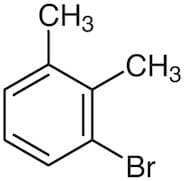
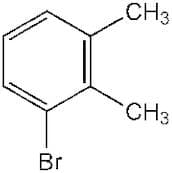
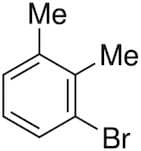
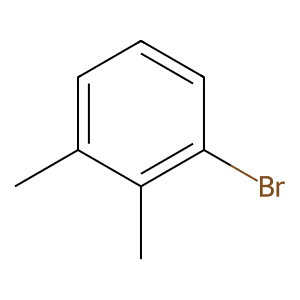
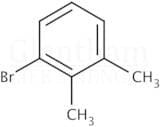
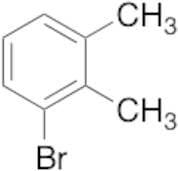
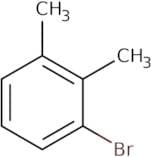
:1-Bromo-2,3-dimethylbenzene
- 1-Bromo-2,3-Dimethylbenzene
- 2,3-Benzene,Methyl Bromide
- 2,3-Dimethyl bromobenzene
- 2,3-Dimethylbenzene bromide
- 2,3-Dimethylbromobenzene
- 3-Bromo-1,2-dimethylbenzene
- 3-Bromo-1,2-xylene
- 3-Bromo-Ortho-Xylene
- Benzene, 1-bromo-2,3-dimethyl-
- NSC 76561
- o-Xylene, 3-bromo-
- See more synonyms
3-Bromo-o-xylene
CAS:Formula:C8H9BrPurity:>98.0%(GC)Color and Shape:Colorless to Light yellow to Light orange clear liquidMolecular weight:185.063-Bromo-o-xylene, 99%
CAS:3-Bromo-o-xylene is an important raw material and intermediate used in organic synthesis, pharmaceuticals and agrochemicals. This Thermo Scientific Chemicals brand product was originally part of the Alfa Aesar product portfolio. Some documentation and label information may refer to the legacy brand.Formula:C8H9BrPurity:99%Color and Shape:Clear colorless to pale yellow, LiquidMolecular weight:185.063-Bromo-1,2-dimethylbenzene, min. 98%
CAS:Formula:C8H9BrPurity:min. 98%Color and Shape:colorless to pale yellow liq.Molecular weight:185.062,3-Dimethyl Bromobenzene
CAS:Formula:C8H9BrColor and Shape:Pale Yellow Clear LiquidMolecular weight:185.061-Bromo-2,3-dimethylbenzene
CAS:1-Bromo-2,3-dimethylbenzeneFormula:C8H9BrPurity:99%Color and Shape: clear. colourless liquidMolecular weight:185.06106g/mol3-Bromo-o-xylene
CAS:Formula:C8H9BrPurity:≥ 98.5%Color and Shape:Clear, colourless to pale yellow liquidMolecular weight:185.073-Bromo-o-xylene
CAS:Formula:C8H9BrPurity:98.0%Color and Shape:Solid, No data available.Molecular weight:185.0641-Bromo-2,3-dimethyl-benzene
CAS:Controlled ProductApplications 1-Bromo-2,3-dimethyl-benzene is a useful synthetic intermediate. It is used as a reagent to synthesize vaniprevir. It can also be used to synthesize various piperidine derivatives, e.g., 4-arylpiperidines and cinnamoylpiperidine, which are 5-HT2C agonist and PAR1 antagonist, respectively.
Not a dangerous good if item is equal to or less than 1g/ml and there is less than 100g/ml in the package
References Song, Z., et a;.: J. Org. Chem., 76, 9553 (2011); Conway, R., et al.: Bioorg. Med. Chem. Lett., 22, 2560 (2012); Planty, B., et al.: Bioorg. Med. Chem. Lett., 20, 1735 (2010)Formula:C8H9BrColor and Shape:NeatMolecular weight:185.06113-bromo-o-xylene
CAS:3-bromo-o-xylene is a xylene that has been shown to react with nucleophiles, such as ammonia and alcohols, by way of nucleophilic substitution. It can be used as a solvent for carboxylic acid derivatives and is also used in the production of ethyl formate. The most important use of 3-bromo-o-xylene is its conversion to 3-bromopropanoic acid (3BPA). This conversion can be achieved through a reaction with an inorganic acid or an organic acid, such as sulfamic acid or trifluoroacetic acid. Another method of conversion is called Grignard reagent synthesis. This process involves the reaction of 3-bromopropene with magnesium metal and an alkyl halide, such as methyl chloride. In addition, 3BPA can be prepared by hydrolysis using hydrochloric acid or potassium phosphate in the presence of b
Formula:C8H9BrPurity:Min. 95%Color and Shape:Clear LiquidMolecular weight:185.06 g/mol