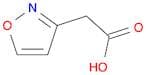
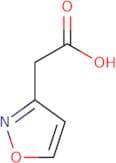
CAS 57612-86-9
:isoxazol-3-yl-acetic acid
Description:
Isoxazol-3-yl-acetic acid, with the CAS number 57612-86-9, is a chemical compound characterized by its isoxazole ring structure, which is a five-membered heterocyclic compound containing both nitrogen and oxygen atoms. This compound features an acetic acid functional group, contributing to its acidic properties. Isoxazol-3-yl-acetic acid is typically a white to off-white solid, and its solubility can vary depending on the solvent, often being more soluble in polar solvents due to the presence of the carboxylic acid group. The compound may exhibit biological activity, making it of interest in pharmaceutical research, particularly in the development of drugs targeting various conditions. Its reactivity is influenced by the functional groups present, allowing for potential derivatization and modification in synthetic applications. As with many organic compounds, handling should be conducted with care, considering safety data and potential hazards associated with its use.
Formula:C5H5NO3
Sort by
Purity (%)
0
100
|
0
|
50
|
90
|
95
|
100
Found 3 products.
2-(Isoxazol-3-yl)acetic acid
CAS:Formula:C5H5NO3Purity:95.0%Color and Shape:Liquid, No data available.Molecular weight:127.0992-(1,2-Oxazol-3-yl)acetic acid
CAS:2-(1,2-Oxazol-3-yl)acetic acid is a nitro compound that binds to the N-methyl-D-aspartate receptor. It has been shown to have low expression in biological samples and may play a role in autoimmune diseases, cancer, and leukemic mice. 2-(1,2-Oxazol-3-yl)acetic acid is an agonist of the NMDAR and may be used for the treatment of alopecia areata. 2-(1,2-Oxazol-3-yl)acetic acid is also an antagonist at the CXCR4 chemokine receptor. The binding of this compound prevents chemokines from binding to their receptors on cells in the immune system. This inhibits inflammation by preventing chemokines from activating inflammatory cells such as neutrophils and macrophages.
Formula:C5H5NO3Purity:Min. 95%Molecular weight:127.1 g/mol