CAS 5778-80-3
:7-Methoxytacrine
Description:
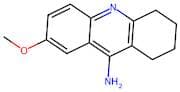
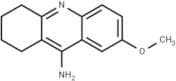
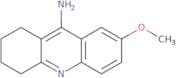
7-Methoxytacrine, also known by its CAS number 5778-80-3, is a synthetic compound that belongs to the class of tacrine derivatives. It is primarily recognized for its potential use in the treatment of neurodegenerative diseases, particularly Alzheimer's disease, due to its ability to inhibit acetylcholinesterase, an enzyme that breaks down the neurotransmitter acetylcholine. This inhibition can enhance cholinergic neurotransmission, which is often impaired in Alzheimer's patients. The compound features a methoxy group at the 7-position of the tacrine structure, which contributes to its pharmacological properties. In terms of physical characteristics, 7-Methoxytacrine is typically a solid at room temperature and may exhibit moderate solubility in organic solvents. Its chemical structure includes a fused bicyclic system, which is characteristic of tacrine derivatives. As with many compounds in this class, research continues to explore its efficacy, safety, and potential side effects in clinical applications.
Formula:C14H16N2O
InChI:InChI=1S/C14H16N2O/c1-17-9-6-7-13-11(8-9)14(15)10-4-2-3-5-12(10)16-13/h6-8H,2-5H2,1H3,(H2,15,16)
InChI key:InChIKey=APQPVVOYBLOJDY-UHFFFAOYSA-N
SMILES:NC=1C=2C(N=C3C1CCCC3)=CC=C(OC)C2
Synonyms:- 1,2,3,4-Tetrahydro-7-methoxy-9-acridinamine
- 7-Meota
- 7-Methoxy-1,2,3,4-Tetrahydroacridin-9-Amine
- 7-Methoxy-1,2,3,4-tetrahydro-9-acridinamine
- 7-Methoxytacrine
- 9-Acridinamine, 1,2,3,4-tetrahydro-7-methoxy-
- Acridine, 9-amino-1,2,3,4-tetrahydro-7-methoxy-
- 9-Amino-7-methoxy-1,2,3,4-tetrahydroacridine
Sort by
Purity (%)
0
100
|
0
|
50
|
90
|
95
|
100
Found 3 products.
TA-03
CAS:TA-03 (7-Meota) is a potent inhibitor of AChE in treatment of cognitive manifestation of AD.Formula:C14H16N2OPurity:99.22%Color and Shape:SolidMolecular weight:228.29Ref: TM-T8585
1mg58.00€5mg116.00€10mg172.00€25mg281.00€50mg396.00€100mg537.00€200mg712.00€1mL*10mM (DMSO)104.00€7-Methoxy-1,2,3,4-tetrahydroacridin-9-amine
CAS:7-Methoxy-1,2,3,4-tetrahydroacridin-9-amine is a cholinergic drug that is used to treat high blood pressure. It blocks the action of acetylcholinesterase, which breaks down acetylcholine in the synaptic cleft. 7-Methoxy-1,2,3,4-tetrahydroacridin-9-amine also has been shown to have an inhibitory effect on red blood cells and may be used as a treatment for dyskinesias. 7-Methoxy-1,2,3,4-tetrahydroacridin-9-amine has a pharmacokinetic study with animal models. The results show that 7MA penetrates the blood brain barrier more easily than other cholinergic drugs. This drug also shows an inhibitory effect on Alzheimer's disease and is active against cholinesterase inhibitors suchFormula:C14H16N2OPurity:Min. 95%Molecular weight:228.29 g/mol