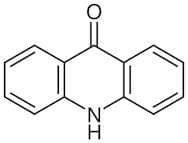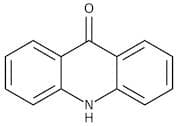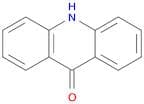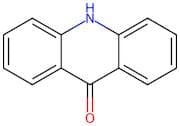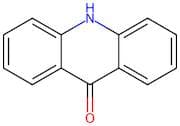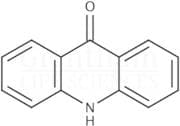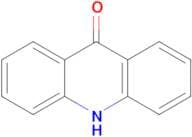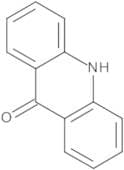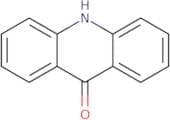
CAS 578-95-0
:Acridone
- 10H-Acridin-9-One
- 9(10H)-Acridinone
- 9(10H)-Acridone
- 9,10-Dihydro-9-oxoacridine
- 9-Acridanone
- 9-Acridone
- 9-Acridone(10H)
- Acridanone
- Acridin-9-one
- Acridine, 9,10-dihydro-9-oxo-
- CK 103 (heterocycle)
- Ck 103
- NSC 408196
- NSC 7664
- acridin-9(10H)-one
- benzo[b][1,8]naphthyridin-5(10H)-one
- See more synonyms
9(10H)-Acridone
CAS:Formula:C13H9NOPurity:>98.0%(HPLC)(N)Color and Shape:Light yellow to Yellow to Green powder to crystalMolecular weight:195.229(10H)-Acridone, 99%
CAS:9(10H)-Acridone is used in the preparation of methyl 9,10-dihydro-9-oxoacridine-10-pentanoate, use for dyeing the organic materials. This Thermo Scientific Chemicals brand product was originally part of the Alfa Aesar product portfolio. Some documentation and label information may refer to the legacFormula:C13H9NOPurity:99%Color and Shape:Yellow to green, PowderMolecular weight:195.22Oxcarbazepine Related Compound C (Acridin-9(10H)-one)
CAS:Aromatic or modified aromatic heterocyclic compounds wiFormula:C13H9NOColor and Shape:Yellow Green SolidMolecular weight:195.06841Oxcarbazepine USP Related Compound C (9-Acridone)
CAS:Formula:C13H9NOColor and Shape:Pale Yellow SolidMolecular weight:195.22Acridone
CAS:Acridone could induce cell apoptosis, inhibited ABCG2 (ATP-binding cassette sub-family G member 2) protein, and adjusted hormone level.Formula:C13H9NOPurity:99.57% - 99.84%Color and Shape:Light Yellow To Gold Crystalline PowderMolecular weight:195.229(10H)-Acridone
CAS:Applications A precursor molecule to several chemotherapeutic agents. A catabolic product of carbamazepine (C175840) metabolite. Used as a fluorescent tag for antibody catalysis.
References Velingkar, V.S. et al.: Res. J. Pharmacol. Tech., 2, 366 92009); Mathieu, O. et al.: Xenobiotica, 41, 91 (2011); Gao, C. et al.: Bioorg. Med. Chem., 16, 8670 (2008); Reymond, J. et al.: Proceed. Nat. Acad. Sci. U.S.A., 93, 4251 (1996);Formula:C13H9NOColor and Shape:NeatMolecular weight:195.22Acridone
CAS:Acridone is a potent antimicrobial agent that inhibits bacteria by binding to the duplex DNA. Acridone has been shown to have inhibitory properties against wastewater treatment, which may be due to its ability to bind with the bacterial dna and inhibit the replication of bacterial cells. Acridone also has genotoxic activity, as it has been shown to react with nuclei in carcinoma cell lines and cause DNA strand breakage. Acridone is a fluorescent probe that can be used for electrochemical impedance spectroscopy (EIS). It binds to the complementary sequence of double-stranded DNA and causes an increase in the impedance of a solution when exposed to an electric current. This property can be used for analytical methods such as gel electrophoresis or chromatography.
Formula:C13H9NOPurity:Min. 95%Color and Shape:PowderMolecular weight:195.22 g/mol