CAS 58-55-9
:Theophylline
Description:
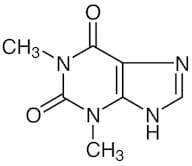
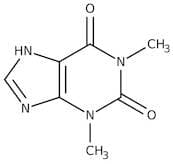
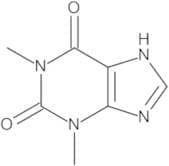
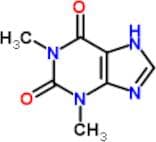
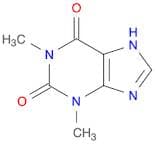
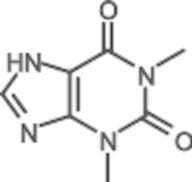
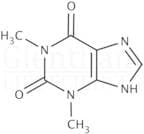
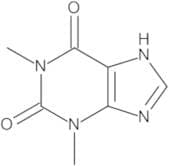
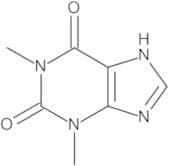
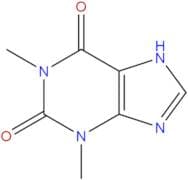
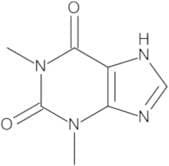
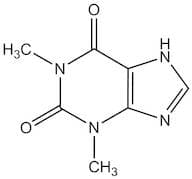
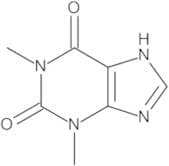
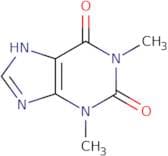
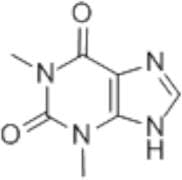
Theophylline is a naturally occurring methylxanthine compound, primarily found in tea leaves and cocoa. It is classified as a bronchodilator, which means it helps to relax and open the airways in the lungs, making it useful in treating respiratory diseases such as asthma and chronic obstructive pulmonary disease (COPD). The chemical formula of theophylline is C7H8N4O2, and it has a molecular weight of approximately 180.17 g/mol. Theophylline exhibits a moderate solubility in water and is more soluble in organic solvents. Its structure features a purine-like ring system, which contributes to its biological activity. Theophylline acts by inhibiting phosphodiesterase enzymes, leading to increased levels of cyclic AMP, which promotes relaxation of bronchial smooth muscle. Additionally, it has anti-inflammatory properties and can enhance respiratory muscle function. While generally well-tolerated, theophylline can have side effects, particularly at higher doses, including gastrointestinal disturbances, insomnia, and increased heart rate. Its therapeutic use requires careful monitoring of blood levels due to its narrow therapeutic index.
Formula:C7H8N4O2
InChI:InChI=1S/C7H8N4O2/c1-10-5-4(8-3-9-5)6(12)11(2)7(10)13/h3H,1-2H3,(H,8,9)
InChI key:InChIKey=ZFXYFBGIUFBOJW-UHFFFAOYSA-N
SMILES:O=C1C2=C(N(C)C(=O)N1C)N=CN2
Synonyms:- 1,3-Dimethyl-1H-purine-2,6(3H,7H)-dione
- 1,3-Dimethyl-2,3,6,7-tetrahydro-1H-purine-2,6-dione
- 1,3-Dimethyl-2,3,6,9-tetrahydro-1H-purine-2,6-dione
- 1,3-Dimethyl-3,7-dihydro-purine-2,6-dione
- 1,3-Dimethylxanthine
- 1,3-dimethyl-3,4,5,7-tetrahydro-1H-purine-2,6-dione
- 3,7-Dihydro-1,3-dimethyl-1H-purine-2,6-dione
- 3,9-Dihydro-1,3-dimethyl-1H-purine-2,6-dione
- Accurbron
- Aerobin
- Aerolate
- Afonilm
- Apnecut
- Armophylline
- Asmax
- Austyn
- Bilordyl
- Brochoretard
- Bronkodyl
- Cetraphylline
- Chronophyllin
- Diffumal
- Dimethylxanthine
- Duraphyl
- Duraphyllin
- Egifilin
- Elan
- Elixophyllin
- Elixophylline
- Etheophyl
- Euphylong
- Insanovin
- LaBID
- Lanophyllin
- Lasma
- Liquophylline
- Nuelin
- Optiphyllin
- Parkophyllin
- Phylobid
- Physpan
- Pro-Vent
- Pseudotheophylline
- PulmiDur
- Pulmo-Timelets
- Respbid
- Respicur
- Slo-Bid
- Slo-Phyllin
- Solosin
- Sustaire
- Talotren
- Telb-DS
- Telbans
- Teofilina
- Teonova
- Teotard
- Tesona
- Theo-DS
- Theo-Dur
- Theo-Nite
- Theo-Sav
- Theobid
- Theochron
- Theoclear
- Theodel
- Theodrip
- Theofol
- Theograd
- Theolair
- Theon
- Theopek
- Theophyl
- Theophyllin
- Theoplus
- Theostat
- Theotard
- Theovent
- Throphylline
- Unifyl
- Unilong
- Uniphyl
- Uniphyllin
- Xanthium
- 1H-Purine-2,6-dione, 3,7-dihydro-1,3-dimethyl-
- 1H-Purine-2,6-dione, 3,9-dihydro-1,3-dimethyl-
- See more synonyms
Sort by
Purity (%)
0
100
|
0
|
50
|
90
|
95
|
100
Found 26 products.
Aminophylline
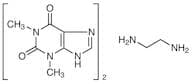
CAS:Formula:C14H16N8O4·C2H8N2Purity:>98.0%(HPLC)Color and Shape:White to Almost white powder to crystalMolecular weight:420.43Theophylline
CAS:Formula:C7H8N4O2Purity:>98.0%(T)(HPLC)Color and Shape:White to Almost white powder to crystalMolecular weight:180.17Theophylline
CAS:<p>Theophylline has been used to study its effects on rat gene expression in the ubiquitin-proteasome pathway that regulates spermatogenesis and epididymal sperm quality. Theophylline has also been used as an internal standard for the measurement of plasma paracetamol levels in humans. This Thermo Scie</p>Formula:C7H8N4O2Color and Shape:White to off-white, PowderMolecular weight:180.17Theophylline
CAS:TheophyllineFormula:C7H8N4O2Purity:99.9%Color and Shape:White SolidMolecular weight:180.06473Theophylline
CAS:Theophylline and aminophylline (excluding fenetylline) and their derivatives, salts thereof, not elsewhere specified or includedFormula:C7H8N4O2Color and Shape:White PowderMolecular weight:180.17 g/molTheophylline Melting Point Standard (Approximately 271 degrees)
CAS:Theophylline and aminophylline (excluding fenetylline) and their derivatives, salts thereof, not elsewhere specified or includedFormula:C7H8N4O2Color and Shape:White Crystalline PowderMolecular weight:180.06473Theophylline
CAS:Theophylline (1,3-Dimethylxanthine) is a methyl xanthine derivative from tea with diuretic, smooth muscle relaxant, bronchial dilation, cardiac and centralFormula:C7H8N4O2Purity:99.65% - 99.98%Color and Shape:White Solid PowderMolecular weight:180.16Theophylline (Dimenhydrinate EP Impurity A, Diprophylline EP Impurity B)
CAS:Formula:C7H8N4O2Color and Shape:White To Off-White SolidMolecular weight:180.17Theophylline
CAS:Formula:C7H8N4O2Purity:≥ 99.0%Color and Shape:White to off-white crystalline powderMolecular weight:180.16Theophylline 100 µg/mL in Acetonitrile
CAS:Controlled ProductFormula:C7H8N4O2Color and Shape:Single SolutionMolecular weight:180.16Theophylline
CAS:TheophyllineFormula:C7H8N4O2Purity:≥ 98.0 % (HPLC)Color and Shape:PowderMolecular weight:180.17Theophylline
CAS:Controlled Product<p>Applications Xanthine derivative with diuretic, cardiac stimulant and smooth muscle relaxant activities; isomeric with theobromine. Small amounts occur in tea. Bronchodilator.<br> Not a dangerous good if item is equal to or less than 1g/ml and there is less than 100g/ml in the package<br>References Cohen, J.L., et al.: Anal. Profiles Drug Subs., 4, 466 (1975); Svedmyr, K., et al.: Allergy, 37, 111 (1982);<br></p>Formula:C7H8N4O2Color and Shape:Off-WhiteMolecular weight:180.161,3-Dimethyl-2,6-dioxo-1,2,3,6-tetrahydropurine
CAS:Controlled Product<p>1,3-Dimethyl-2,6-dioxo-1,2,3,6-tetrahydropurine (1,3DMP) is a drug that has been used experimentally as a congestive heart failure treatment. It is an analogue of theophylline and has been shown to have similar effects on the cardiovascular system. 1,3DMP can be metabolized by cytochrome P450 enzymes to form compounds that are active in the nucleus of cells and may affect gene expression. The drug has also been shown to have a protective effect on the bowel when administered with anhydrous sodium sulphate. 1,3DMP binds to DNA in the nucleus of cells and inhibits nuclear dna synthesis by competitive inhibition with the natural substrate S-adenosylmethionine. This binding prevents transcription of DNA into RNA and protein synthesis. 1,3DMP also binds to proteins in human serum and has pharmacological activities such as</p>Formula:C7H8N4O2Purity:Min. 95%Color and Shape:PowderMolecular weight:180.16 g/molTheophylline anhydrous pure, 99%
CAS:Formula:C7H8N4O2Purity:min. 99%Color and Shape:White to off -white to light yellow, Crystalline powderMolecular weight:180.16