CAS 58124-18-8
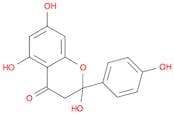
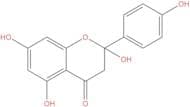
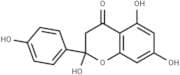
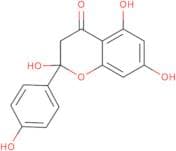
:2,3-Dihydro-2,5,7-trihydroxy-2-(4-hydroxyphenyl)-4H-1-benzopyran-4-one
Description:
2,3-Dihydro-2,5,7-trihydroxy-2-(4-hydroxyphenyl)-4H-1-benzopyran-4-one, commonly known as a flavonoid compound, exhibits several notable characteristics. This substance features a benzopyran core structure, which is typical of flavonoids, contributing to its potential antioxidant properties. The presence of multiple hydroxyl groups enhances its ability to scavenge free radicals, making it of interest in various biological and pharmacological studies. Its molecular structure suggests it may interact with various biological targets, potentially influencing cellular signaling pathways. The compound is typically soluble in polar solvents due to its hydroxyl groups, which can form hydrogen bonds. Additionally, its structural complexity may lead to interesting interactions with other biomolecules, making it a candidate for research in areas such as natural product chemistry and medicinal chemistry. Overall, this compound's unique features position it as a subject of interest for further investigation into its health benefits and applications in food and pharmaceutical industries.
Formula:C15H12O6
InChI:InChI=1S/C15H12O6/c16-9-3-1-8(2-4-9)15(20)7-12(19)14-11(18)5-10(17)6-13(14)21-15/h1-6,16-18,20H,7H2
InChI key:InChIKey=NFENYLPEYDNIMO-UHFFFAOYSA-N
SMILES:O=C1C=2C(OC(O)(C1)C3=CC=C(O)C=C3)=CC(O)=CC2O
Synonyms:- 2,3-Dihydro-2,5,7-trihydroxy-2-(4-hydroxyphenyl)-4H-1-benzopyran-4-one
- 2,5,7-Trihydroxy-2-(4-hydroxyphenyl)chroman-4-one
- 4H-1-Benzopyran-4-one, 2,3-dihydro-2,5,7-trihydroxy-2-(4-hydroxyphenyl)-
Sort by
Purity (%)
0
100
|
0
|
50
|
90
|
95
|
100
Found 6 products.
2-Hydroxynaringenin
CAS:2-Hydroxynaringenin (2,4',5,7-Tetrahydroxyflavanone) is a flavonoid compound isolated from Paeonia lactiflora in Taiwan.Formula:C15H12O6Purity:98%Color and Shape:SolidMolecular weight:288.252-Hydroxynaringenin
CAS:2-Hydroxynaringenin is a flavonoid compound, which is derived from the extraction and purification of various citrus fruits, particularly from the peel and pulp. It belongs to a class of secondary metabolites found predominantly in these plants, functioning as part of their natural defense mechanism.Formula:C15H12O6Purity:Min. 95%Molecular weight:288.25 g/mol