CAS 58139-03-0
:2-iodo-6-methoxypyrazine
Description:
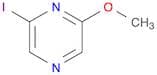
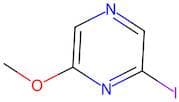
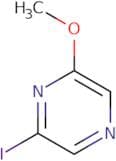
2-Iodo-6-methoxypyrazine is an organic compound characterized by its pyrazine ring, which is a six-membered aromatic heterocycle containing two nitrogen atoms. The presence of an iodine atom at the second position and a methoxy group at the sixth position contributes to its unique chemical properties. This compound is typically a colorless to pale yellow liquid and is known for its strong, earthy, and green bell pepper-like aroma, making it of interest in the flavor and fragrance industry. Its molecular structure allows for various chemical reactions, including nucleophilic substitutions and electrophilic aromatic substitutions, due to the electron-withdrawing nature of the iodine atom and the electron-donating properties of the methoxy group. Additionally, 2-iodo-6-methoxypyrazine is soluble in organic solvents, which enhances its utility in formulations. Safety data indicates that, like many halogenated compounds, it should be handled with care due to potential toxicity and environmental concerns. Overall, its distinctive sensory profile and reactivity make it a valuable compound in both synthetic chemistry and sensory applications.
Formula:C5H5IN2O
InChI:InChI=1/C5H5IN2O/c1-9-5-3-7-2-4(6)8-5/h2-3H,1H3
SMILES:COc1cncc(I)n1
Synonyms:- Pyrazine, 2-iodo-6-methoxy-
- 2-Iodo-6-methoxypyrazine
Sort by
Purity (%)
0
100
|
0
|
50
|
90
|
95
|
100
Found 4 products.
2-Iodo-6-methoxypyrazine
CAS:Formula:C5H5IN2OPurity:97%Color and Shape:SolidMolecular weight:236.01052-Iodo-6-methoxypyrazine
CAS:2-Iodo-6-methoxypyrazine is a chemical compound that belongs to the group of aromatic compounds. It is used as an intermediate in the production of other chemicals. 2-Iodo-6-methoxypyrazine has been found to inhibit the growth of microorganisms and can be used in the production of antibiotics, antihistamines, and antioxidants. The biosynthesis of 2-iodo-6-methoxypyrazine is carried out by chondromyces crocatus (a type of fungus). This process starts with the conversion of pyruvic acid into acetaldehyde by aldehyde decarboxylase. Acetaldehyde then reacts with methyl iodide to form 2-iodoacetaldehyde. Next, this intermediate reacts with methoxyacetone phosphate, leading to methyl pyruvate and finally 2-iodo-6-methoxypyrazine.Formula:C5H5IN2OPurity:Min. 95%Molecular weight:236.01 g/mol