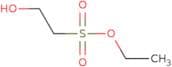
CAS 58337-44-3
:Ethyl isethionate
Description:
Ethyl isethionate is an organic compound classified as a sulfonate ester, specifically an ethyl ester of isethionic acid. It is typically a colorless to pale yellow liquid with a mild, pleasant odor. Ethyl isethionate is known for its surfactant properties, making it useful in various personal care and cosmetic formulations, such as shampoos and body washes, where it acts as a cleansing and foaming agent. The compound is soluble in water and has good compatibility with other surfactants, enhancing the overall performance of formulations. Additionally, it is considered to be gentle on the skin, making it suitable for sensitive skin applications. Ethyl isethionate is also recognized for its ability to improve the texture and feel of products, contributing to a smooth and soft skin sensation. Its stability under various conditions and low irritation potential further enhance its appeal in the formulation of skin and hair care products. Overall, ethyl isethionate is valued for its multifunctional properties in the cosmetic industry.
Formula:C4H10O4S
InChI:InChI=1/C4H10O4S/c1-2-8-9(6,7)4-3-5/h5H,2-4H2,1H3
SMILES:CCOS(=O)(=O)CCO
Synonyms:- Ethanesulfonic acid, 2-hydroxy-, ethyl ester
- Ethyl 2-hydroxyethanesulfonate
- Ethyl hydroxyethanesulfonate
Sort by
Purity (%)
0
100
|
0
|
50
|
90
|
95
|
100
Found 4 products.
Ethyl Isethionate
CAS:Ethyl isethionate is a chemical compound that belongs to the group of ethyl esters. It has been used as an additive in food, and it has also been shown to be effective against L1210 and other cancer cells. Ethyl isethionate has been shown to have anti-inflammatory properties and can inhibit prostaglandin synthesis. The linear regression analysis demonstrated that fatty acids can react with anions to form esters, which may be the mechanism by which ethyl isethionate was formed. Ethyl isethionate also reacts with fluorine, which results in the formation of fluoroethyl esters. This reaction may lead to the formation of busulfan, a chemotherapy drug used for treating leukemia and Hodgkin's disease. Another possible route for the synthesis of ethyl isethionate involves alkylation of long-chain chlorides with fatty acids or trifluoromethanesulfonic acid.Formula:C4H10O4SPurity:Min. 95%Molecular weight:154.18 g/mol