CAS 5847-57-4
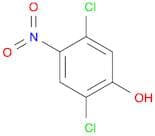
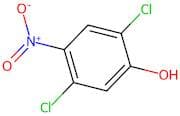
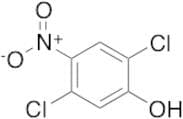
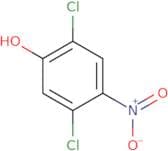
:2,5-Dichloro-4-nitrophenol
Description:
2,5-Dichloro-4-nitrophenol is an organic compound characterized by its aromatic structure, featuring a phenolic group substituted with two chlorine atoms and a nitro group. It is typically a yellow to brown solid at room temperature and is known for its moderate solubility in organic solvents and limited solubility in water. This compound exhibits properties typical of chlorinated phenols, including potential toxicity and environmental persistence. It is often used in various applications, including as an intermediate in the synthesis of dyes, pesticides, and pharmaceuticals. The presence of both chlorine and nitro groups contributes to its reactivity, making it a subject of interest in studies related to environmental chemistry and toxicology. Additionally, 2,5-Dichloro-4-nitrophenol can undergo various chemical reactions, such as nucleophilic substitution and reduction, which are important for its transformation in biological and environmental systems. Safety precautions are necessary when handling this compound due to its potential health hazards, including skin and respiratory irritation.
Formula:C6H3Cl2NO3
InChI:InChI=1S/C6H3Cl2NO3/c7-3-2-6(10)4(8)1-5(3)9(11)12/h1-2,10H
InChI key:InChIKey=BWQWBOCFVUBGEF-UHFFFAOYSA-N
SMILES:N(=O)(=O)C1=C(Cl)C=C(O)C(Cl)=C1
Synonyms:- Phenol, 2,5-dichloro-4-nitro-
- 2,5-Dichloro-4-nitrophenol
Sort by
Purity (%)
0
100
|
0
|
50
|
90
|
95
|
100
Found 5 products.
2,5-Dichloro-4-nitrophenol
CAS:Formula:C6H3Cl2NO3Purity:%Color and Shape:SolidMolecular weight:207.99892,5-Dichloro-4-nitrophenol
CAS:Controlled ProductApplications 2,5-DICHLORO-4-NITROPHENOL (cas# 5847-57-4) is a useful research chemical.
Formula:C6H3NO3Cl2Color and Shape:NeatMolecular weight:207.992,5-Dichloro-4-nitrophenol
CAS:Formula:C6H3Cl2NO3Purity:98%Color and Shape:SolidMolecular weight:207.992,5-Dichloro-4-nitrophenol
CAS:Harmol is a natural substance that is found in the leaves of the plant Myrtus communis. Harmol is metabolized to harmalol and then to harmalin, which are conjugates that have been shown to have anticancer properties. Harmalol has been shown to inhibit mitochondrial membrane potential and decrease cell proliferation in cancer cells. It also inhibits p-450 enzymes and β-carboline alkaloids, which may contribute to its anticancer effects. Harmalol has also been shown to be an inhibitor of cellular respiration in animals and humans, suggesting that it may be useful for the treatment of various diseases associated with mitochondrial dysfunction.Formula:C6H3Cl2NO3Purity:Min. 95%Molecular weight:208 g/mol