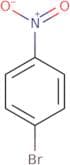
CAS 586-78-7
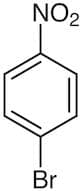
:1-Bromo-4-nitrobenzene
Description:
1-Bromo-4-nitrobenzene is an organic compound characterized by the presence of both bromine and nitro functional groups attached to a benzene ring. Its molecular formula is C6H4BrNO2, indicating that it contains six carbon atoms, four hydrogen atoms, one bromine atom, one nitrogen atom, and two oxygen atoms. This compound typically appears as a yellow crystalline solid and is known for its moderate solubility in organic solvents such as ethanol and acetone, but limited solubility in water. 1-Bromo-4-nitrobenzene is primarily used in organic synthesis, serving as an intermediate in the production of various pharmaceuticals, dyes, and agrochemicals. It exhibits electrophilic aromatic substitution reactivity due to the presence of the nitro group, which is a strong electron-withdrawing group, enhancing the reactivity of the aromatic ring. Additionally, it is important to handle this compound with care, as it may pose health risks, including potential toxicity and environmental hazards. Proper safety measures should be observed when working with this substance in laboratory settings.
Formula:C6H4BrNO2
InChI:InChI=1S/C6H4BrNO2/c7-5-1-3-6(4-2-5)8(9)10/h1-4H
InChI key:InChIKey=ZDFBKZUDCQQKAC-UHFFFAOYSA-N
SMILES:N(=O)(=O)C1=CC=C(Br)C=C1
Synonyms:- 1-Brom-4-nitrobenzol
- 1-Bromo-4-Nitrobenceno
- 1-Bromo-4-nitro benzene
- 1-Nitro-4-bromobenzene
- 4-Bromo-1-nitrobenzene
- 4-Bromonitrobenzene
- 4-Nitro-1-bromobenzene
- 4-Nitrobromobenzene
- 4-Nitrophenyl Bromide
- Benzene, 1-bromo-4-nitro-
- Nitrobromobenzene
- Nsc 3526
- P-Bromonitrobenzene
- p-Nitrobromobenzene
- p-Nitrophenyl bromide
- See more synonyms
Sort by
Purity (%)
0
100
|
0
|
50
|
90
|
95
|
100
Found 6 products.
1-Bromo-4-nitrobenzene
CAS:Formula:C6H4BrNO2Purity:>99.0%(GC)Color and Shape:White to Light yellow to Green powder to crystalMolecular weight:202.011-Bromo-4-nitrobenzene, 98%
CAS:It can be employed as a syntheses material intermediate. It is also used as a pharmaceutical intermediate. This Thermo Scientific Chemicals brand product was originally part of the Alfa Aesar product portfolio. Some documentation and label information may refer to the legacy brand. The original AlfFormula:C6H4BrNO2Purity:98%Color and Shape:White to cream to orange to brown, PowderMolecular weight:202.014-Bromonitrobenzene
CAS:4-BromonitrobenzeneFormula:C6H4BrNO2Purity:≥95%Color and Shape: off white to pale yellow crystalline solidMolecular weight:202.00546g/mol1-Bromo-4-nitrobenzene
CAS:Formula:C6H4BrNO2Purity:95.0%Color and Shape:Solid, Yellow powderMolecular weight:202.0071-Bromo-4-nitrobenzene
CAS:Controlled ProductApplications 1-Bromo-4-nitrobenzene is part of a group of compounds that have the ability to stimulate the microbial degradation of polychlorinated biphenyls (PCBs), rendering them less harmful to the environment, animals and humans. 1-Bromo-4-nitrobenzene is also an electron-poor arene that has genotoxic effects on humans.
Not a dangerous good if item is equal to or less than 1g/ml and there is less than 100g/ml in the package
References DeWeerd, K. & Bedard, D.: Env. Sci. Tech., 33, 2057 (1999); Huang, Q., et al.: J. Env. Sci., 8, 103 (1995); Imperato. G., et al.: Adv. Synth. Cat. 348, 2243 (2006)Formula:C6H4BrNO2Color and Shape:NeatMolecular weight:202.011-Bromo-4-nitrobenzene
CAS:1-Bromo-4-nitrobenzene is a bromonitrile that is used to synthesize optical sensors. It is an intermediate in the synthesis of 1,5-dibromo-4-nitrobenzane, which was used as a model system for the reaction mechanism of coupling reactions. The coupling of 1-bromo-4-nitrobenzane with hydrochloric acid and palladium catalysts leads to the formation of a diazonium salt. This reaction can be analyzed by looking at the nitro group and the halides in the molecule. The nitro group reacts with ammonia to form an aminonitrile and water. Halides react with ammonia to form ammonium salts and hydrogen halides. Diazonium salts are then generated by adding nitrous acid (HNO2) or hydroxylamine (NHOH) to these compounds. Finally, transfer reactions are carried out by heating 1Formula:C6H4BrNO2Purity:Min. 95%Molecular weight:202.01 g/mol