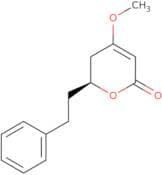
CAS 587-63-3
:Dihydrokavain
Description:
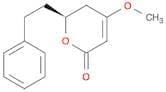
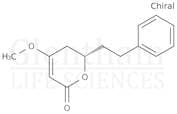
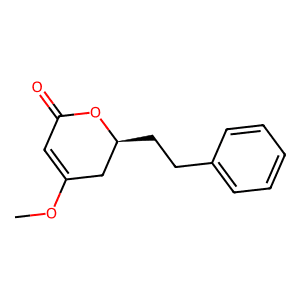
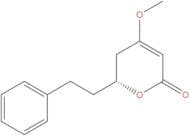
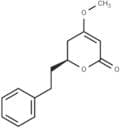
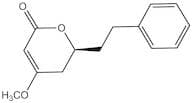
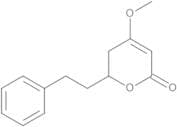
Dihydrokavain, with the CAS number 587-63-3, is a chemical compound derived from the kava plant, known for its psychoactive properties. It belongs to the class of compounds called kavalactones, which are primarily responsible for the sedative and anxiolytic effects associated with kava consumption. Dihydrokavain is characterized by its unique molecular structure, which includes a lactone ring, contributing to its biological activity. The compound is typically found in the roots of the kava plant and is often used in traditional beverages for its calming effects. In terms of physical properties, dihydrokavain is generally a colorless to pale yellow liquid with a characteristic aroma. Its solubility in organic solvents and limited solubility in water make it suitable for various applications in herbal medicine and dietary supplements. Research into dihydrokavain has indicated potential benefits for anxiety relief and muscle relaxation, although further studies are needed to fully understand its pharmacological effects and safety profile.
Formula:C14H16O3
InChI:InChI=1S/C14H16O3/c1-16-13-9-12(17-14(15)10-13)8-7-11-5-3-2-4-6-11/h2-6,10,12H,7-9H2,1H3/t12-/m0/s1
InChI key:InChIKey=VOOYTQRREPYRIW-LBPRGKRZSA-N
SMILES:C(CC1=CC=CC=C1)[C@H]2CC(OC)=CC(=O)O2
Synonyms:- (+)-(S)-Dihydrokavain
- (+)-7,8-Dihydrokavain
- (+)-Dihydrokawain
- (2S)-4-Methoxy-2-(2-phenylethyl)-2,3-dihydropyran-6-one
- (6S)-4-Methoxy-6-(2-phenylethyl)-5,6-dihydro-2H-pyran-2-one
- (6S)-5,6-Dihydro-4-methoxy-6-(2-phenylethyl)-2H-pyran-2-one
- (S)-(+)-Dihydrokawain
- 2H-Pyran-2-one, 5,6-dihydro-4-methoxy-6- (2-phenylethyl)-, (S)-
- 2H-Pyran-2-one, 5,6-dihydro-4-methoxy-6-phenethyl-
- 2H-pyran-2-one, 5,6-dihydro-4-methoxy-6-(2-phenylethyl)-, (6S)-
- 7,8-Dihydrokawain
- Kawain, dihydro-
- Marindinin
- NSC 112163
- See more synonyms
Sort by
Purity (%)
0
100
|
0
|
50
|
90
|
95
|
100
Found 10 products.
2H-Pyran-2-one, 5,6-dihydro-4-methoxy-6-(2-phenylethyl)-, (6S)-
CAS:Formula:C14H16O3Purity:99%Color and Shape:SolidMolecular weight:232.2750Dihydrokawain
CAS:Dihydrokavain may play an important role in regulation of GABAergic neurotransmission, it non-competitively inhibits the specific binding of [3H]-batrachotoxinin-A 20-alpha-benzoate to receptor site 2 of voltage-gated Na+ channels. Dihydrokavain may treat sleep disturbances, as well as stress and anxiety.Formula:C14H16O3Purity:95%~99%Molecular weight:232.279Dihydrokavain
CAS:Dihydrokavain, a major kavalactone in kava, significantly affects its anxiolytic properties.Formula:C14H16O3Purity:99.82% - ≥95%Color and Shape:White PowderMolecular weight:232.27Dihydrokavain
CAS:LactoneFormula:C14H16O3Purity:≥ 98.0 % (HPLC)Color and Shape:PowderMolecular weight:232.28(+)-(S)-Dihydrokavain
CAS:Controlled ProductApplications (+)-(S)-Dihydrokavain is a kavalactone found in kava beverages consumed by South Pacific islanders. Furthermore, roots and extracts of the kava plant have been used in herbal medicine to treat sleep disturbances, as well as stress and anxiety.
References Warburton, E., et al.: Eur. J. Mass Spectrom., 12, 223(2006); Wang, J., et al.: J. Food Sci. Technol., 52, 1164 (2015)Formula:C14H16O3Color and Shape:NeatMolecular weight:232.28Dihydrokawain
CAS:Dihydrokawain is a bioactive compound, which is an essential kavalactone found in the roots of the kava plant (Piper methysticum). This compound is derived from the extraction and processing of kava root materials, traditionally utilized in Pacific Island cultures for its psychoactive properties.Formula:C14H16O3Purity:Min. 95%Color and Shape:PowderMolecular weight:232.28 g/mol