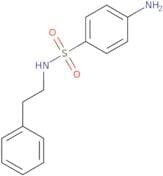
CAS 587850-67-7
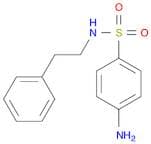
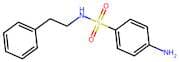
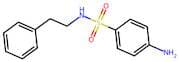
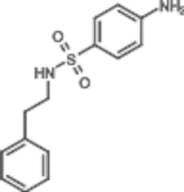
:Benzenesulfonamide, 4-amino-N-(2-phenylethyl)-
Description:
Benzenesulfonamide, 4-amino-N-(2-phenylethyl)- is an organic compound characterized by the presence of a sulfonamide functional group attached to a benzene ring, along with an amino group and a phenylethyl substituent. This compound typically exhibits properties associated with sulfonamides, such as solubility in polar solvents and potential biological activity. The amino group can participate in hydrogen bonding, influencing its reactivity and interactions with biological targets. The phenylethyl moiety may contribute to the compound's lipophilicity, affecting its pharmacokinetic properties. As a sulfonamide derivative, it may also exhibit antibacterial or diuretic properties, although specific biological activities would depend on its structural nuances and the context of its use. The compound's molecular structure suggests it could be of interest in medicinal chemistry, particularly in the development of pharmaceuticals. Safety and handling precautions should be observed, as with all chemical substances, due to potential toxicity or reactivity.
Formula:C14H16N2O2S
Sort by
Purity (%)
0
100
|
0
|
50
|
90
|
95
|
100
Found 6 products.
4-Amino-n-(2-phenylethyl)benzenesulfonamide
CAS:Formula:C14H16N2O2SPurity:98%Color and Shape:SolidMolecular weight:276.35404-Amino-N-Phenethylbenzenesulfonamide
CAS:4-Amino-N-PhenethylbenzenesulfonamidePurity:≥98%Molecular weight:276.35g/molC-7280948
CAS:C-7280948 is a PRMT1 inhibitor.Formula:C14H16N2O2SPurity:99.55% - ≥95%Color and Shape:SolidMolecular weight:276.35Ref: TM-T2097
5mg46.00€1mL*10mM (DMSO)49.00€10mg66.00€25mg109.00€50mg178.00€100mg268.00€200mg414.00€500mg667.00€4-Amino-N-(2-phenylethyl)benzenesulfonamide
CAS:4-Amino-N-(2-phenylethyl)benzenesulfonamide (4APBS) is a histone deacetylase inhibitor. It has been shown to inhibit the histone methyltransferase activity of EZH2, which is important for regulating gene expression, in cells treated with 4APBS. This inhibition leads to increased levels of the transcriptional coactivator β-catenin and reduced levels of tumor suppressor genes. These changes ultimately lead to an increase in cancer cell proliferation and decreased apoptosis. 4APBS also interacts with hormone receptors that are found on the surface of cells and can regulate cellular functions such as proliferation, differentiation, or apoptosis.Formula:C14H16N2O2SPurity:Min. 95%Color and Shape:Off-White PowderMolecular weight:276.36 g/mol4-amino-N-(2-phenylethyl)benzenesulfonamide
CAS:Formula:C14H16N2O2SPurity:≥98%Molecular weight:276.35