CAS 588703-29-1
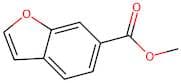
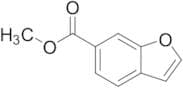
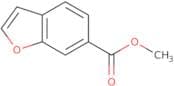
:Methyl benzofuran-6-carboxylate
Description:
Methyl benzofuran-6-carboxylate is an organic compound characterized by its benzofuran structure, which consists of a fused benzene and furan ring, with a carboxylate group and a methyl ester functional group. This compound typically exhibits properties associated with both aromatic and heterocyclic compounds, such as stability and potential reactivity due to the presence of the carboxylate group. It is likely to be a colorless to pale yellow liquid or solid, depending on its purity and specific conditions. Methyl benzofuran-6-carboxylate may be soluble in organic solvents like ethanol and dichloromethane, while being less soluble in water due to its hydrophobic aromatic structure. This compound can be utilized in various chemical syntheses, including the development of pharmaceuticals, agrochemicals, and other fine chemicals, owing to its unique structural features that may impart biological activity. As with many organic compounds, handling should be done with care, considering potential toxicity and environmental impact.
Formula:C10H8O3
Sort by
Purity (%)
0
100
|
0
|
50
|
90
|
95
|
100
Found 5 products.
Methyl benzofuran-6-carboxylate
CAS:Formula:C10H8O3Purity:98%Color and Shape:SolidMolecular weight:176.1687Methyl benzofuran-6-carboxylate
CAS:Methyl benzofuran-6-carboxylatePurity:99%Molecular weight:176.17g/molMethyl Benzofuran-6-carboxylate
CAS:Controlled ProductFormula:C10H8O3Color and Shape:NeatMolecular weight:176.169Methyl benzofuran-6-carboxylate
CAS:Methyl benzofuran-6-carboxylate is a synthetic retinoid that is a conformationally constrained analogue of retinoic acid, which is one of the most powerful biological molecules. Methyl benzofuran-6-carboxylate has been shown to be an effective anti-inflammatory agent and may be useful in the treatment of inflammatory skin diseases. It also inhibits the production of proinflammatory cytokines and chemokines, such as TNF-α, IL-1β, IL-8, CCL2, CXCL1, and CXCL2. Methyl benzofuran-6-carboxylate binds to specific receptors on cell surfaces to inhibit the production of inflammatory mediators. The drug also has been shown to have antiangiogenic activity. This property may be due to its ability to inhibit the production of vascular endothelial growth factor (VEGF) and other angiogenic factors.Formula:C10H8O3Purity:Min. 95%Molecular weight:176.17 g/mol