CAS 58988-41-3
:Glycine, N-cyclopentyl-
Description:
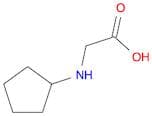
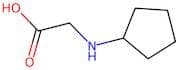
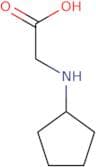
Glycine, N-cyclopentyl- is an organic compound characterized by the presence of a glycine backbone with a cyclopentyl group attached to the nitrogen atom. As a derivative of glycine, it retains the amino acid's basic structure, which includes an amino group (-NH2), a carboxyl group (-COOH), and a side chain, in this case, the cyclopentyl group. This modification can influence its solubility, stability, and biological activity compared to glycine itself. The cyclopentyl group may impart unique steric and electronic properties, potentially affecting its interactions in biochemical systems. Glycine derivatives are often studied for their roles in pharmaceuticals, as they can serve as neurotransmitter modulators or precursors in various metabolic pathways. The compound's specific properties, such as melting point, boiling point, and reactivity, would depend on its molecular structure and the presence of functional groups. Overall, N-cyclopentyl-glycine represents a fascinating area of study within medicinal chemistry and biochemistry.
Formula:C7H13NO2
Synonyms:- N-Cyclopentylglycine
- Nsc 230427
Sort by
Purity (%)
0
100
|
0
|
50
|
90
|
95
|
100
Found 4 products.
2-(cyclopentylamino)acetic acid
CAS:Formula:C7H13NO2Purity:98%Color and Shape:SolidMolecular weight:143.1836(Cyclopentylamino)acetic acid
CAS:(Cyclopentylamino)acetic acidPurity:98%Molecular weight:143.19g/mol2-(Cyclopentylamino)acetic acid
CAS:2-(Cyclopentylamino)acetic acid is a potent antagonist of histone H3. It also inhibits the production of bradykinin B2, which is important for inflammatory responses and vasodilation. 2-(Cyclopentylamino)acetic acid has been shown to inhibit the growth of bone cancer cells and to have antiviral properties in vitro. It also inhibits HIV infection by blocking reverse transcriptase activity and may be useful as a therapeutic agent in HIV patients with resistance to other anti-HIV drugs.
Formula:C7H13NO2Purity:Min. 95%Molecular weight:143.18 g/mol