CAS 590-46-5
:Betaine chloride
Description:
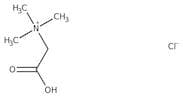
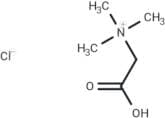
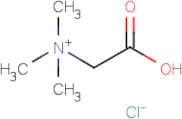
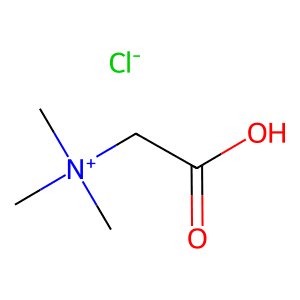
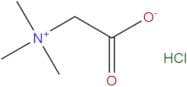
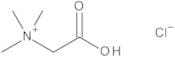
Betaine chloride, with the CAS number 590-46-5, is a quaternary ammonium compound characterized by its chemical structure, which includes a positively charged nitrogen atom bonded to three methyl groups and a carboxylate group. It appears as a white crystalline powder or a colorless liquid and is highly soluble in water, making it useful in various applications. Betaine chloride is known for its role as an osmolyte, helping to stabilize proteins and cellular structures under stress conditions. It is commonly used in the cosmetic and personal care industries as a moisturizing agent and surfactant. Additionally, it serves as a feed additive in animal nutrition, promoting growth and improving gut health. Betaine chloride is generally regarded as safe for use, but like many chemicals, it should be handled with care to avoid potential irritation. Its hygroscopic nature allows it to absorb moisture from the environment, which can affect its storage and handling. Overall, betaine chloride is valued for its multifunctional properties across various fields.
Formula:C5H12NO2·Cl
InChI:InChI=1S/C5H11NO2.ClH/c1-6(2,3)4-5(7)8;/h4H2,1-3H3;1H
InChI key:InChIKey=HOPSCVCBEOCPJZ-UHFFFAOYSA-N
SMILES:C([N+](C)(C)C)C(O)=O.[Cl-]
Synonyms:- (Carboxymethyl)trimethylammonium chloride
- 1-Carboxy-N,N,N-trimethylmethanaminium chloride
- Acetate, 2-(Trimethylammonio)-, Chloride (1:1)
- Achylin
- Acidin
- Acidine
- Acidogeno
- Acidol
- Acidol hydrochloride
- Acinorm
- Acipepsol
- Aciventral forte
- Betaine Chloride
- Betaine HCl
- Glycine betaine hydrochloride
- Glycocoll betaine hydrochloride
- Methanaminium, 1-carboxy-N,N,N-trimethyl-, chloride
- Methanaminium, 1-carboxy-N,N,N-trimethyl-, chloride (1:1)
- Pluchine
- Rubrine C hydrochloride
- Trimethylglycine hydrochloride
- Trimethylglycine hydrochloride salt
- carboxy-N,N,N-trimethylmethanaminium chloride
- See more synonyms
Sort by
Purity (%)
0
100
|
0
|
50
|
90
|
95
|
100
Found 16 products.
Betaine Hydrochloride
CAS:Formula:C5H11NO2·HClPurity:>98.0%(T)Color and Shape:White to Almost white powder to crystalMolecular weight:153.61Betaine hydrochloride, 99%
CAS:Betaine hydrochloride is a naturally occurring compound that has been of interest for its role in osmoregulation. As a drug, it has been used as a source of hydrochloric acid in the treatment of hypochlorhydria. Betaine has also been used in the treatment of liver disorders, for hyperkalemia, for hoFormula:C5H12ClNO2Purity:99%Color and Shape:White to pale cream, Crystals or powder or crystalline powder or lumpsMolecular weight:153.61Betaine Hydrochloride
CAS:Quaternary ammonium salts and hydroxides, whether or not chemically defined, otherFormula:C5H11NO2·HClColor and Shape:White Crystalline PowderMolecular weight:117.07898Methanaminium, 1-carboxy-N,N,N-trimethyl-, chloride
CAS:Formula:C5H12ClNO2Purity:98%Color and Shape:SolidMolecular weight:153.6073Betaine chloride
CAS:Betaine chloride (Betaine hydrochloride) gains the amplification of DNA by decreasing the formation of secondary structure in GC-rich regions.Formula:C5H12ClNO2Purity:99.98%Color and Shape:Colorless To White CrystalsMolecular weight:153.61Betaine hydrochloride
CAS:Formula:C5H11NO2·HClPurity:≥ 98.0% (dried basis)Color and Shape:White powder or crystalsMolecular weight:153.61(carboxymethyl)(trimethyl)ammonium chloride
CAS:(carboxymethyl)(trimethyl)ammonium chloridePurity:99%Betaine hydrochloride
CAS:Betaine hydrochloride is a betaine prodrug that is metabolized by the body to form glycine and choline. Betaine hydrochloride has been shown to have anti-inflammatory properties, which may be due to its ability to inhibit surfactant sodium dodecyl (SDS) from activating enzymes such as polymerase chain reaction (PCR). Betaine hydrochloride also has been shown to improve disease activity in bowel disease patients and can be used as a dietary supplement for individuals with low levels of choline.
Formula:C5H11NO2·HClPurity:Min. 95%Color and Shape:PowderMolecular weight:153.61 g/mol