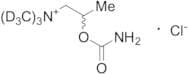
CAS 590-63-6
:Bethanechol chloride
Description:
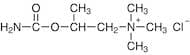
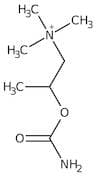
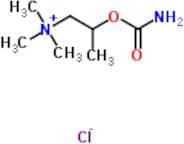
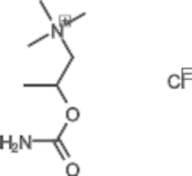
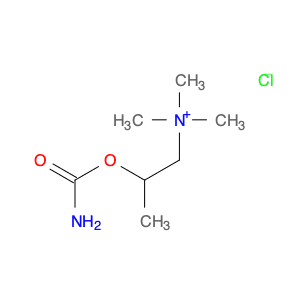
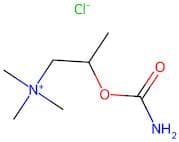
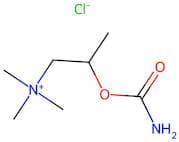
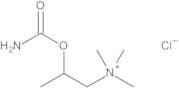
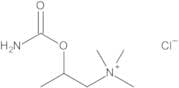
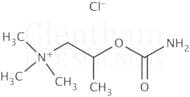
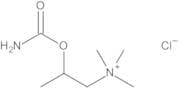
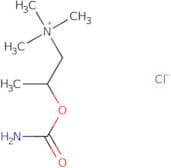
Bethanechol chloride is a synthetic choline ester and a muscarinic agonist primarily used in clinical settings to treat urinary retention and stimulate gastrointestinal motility. It is characterized by its ability to mimic the action of acetylcholine, specifically targeting the muscarinic receptors in the body. This compound is typically administered orally or via subcutaneous injection, and it is known for its relatively short duration of action. Bethanechol chloride is soluble in water, which facilitates its absorption and bioavailability. Its chemical structure includes a quaternary ammonium group, contributing to its positive charge at physiological pH, which influences its pharmacokinetics and distribution. Common side effects may include gastrointestinal discomfort, increased salivation, and sweating, reflecting its cholinergic activity. Due to its specific action on the bladder and gastrointestinal tract, it is contraindicated in patients with certain conditions such as asthma or peptic ulcers, where increased secretions and muscle contractions could exacerbate symptoms. Overall, Bethanechol chloride plays a significant role in managing specific medical conditions related to bladder and digestive function.
Formula:C7H17N2O2·Cl
InChI:InChI=1S/C7H16N2O2.ClH/c1-6(11-7(8)10)5-9(2,3)4;/h6H,5H2,1-4H3,(H-,8,10);1H
InChI key:InChIKey=XXRMYXBSBOVVBH-UHFFFAOYSA-N
SMILES:C([N+](C)(C)C)C(OC(N)=O)C.[Cl-]
Synonyms:- (2-Hydroxypropyl)trimethylammonium chloride carbamate
- (±)-Bethanechol
- 1-(Trimethylazaniumyl)propan-2-yl carbamate chloride
- 1-Propanaminium, 2-[(aminocarbonyl)oxy]-N,N,N-trimethyl-, chloride
- 1-Propanaminium, 2-[(aminocarbonyl)oxy]-N,N,N-trimethyl-, chloride (1:1)
- 1-propanaminium, 2-[(aminocarbonyl)oxy]-N,N,N-trimethyl-, hydrochloride (1:1)
- 2-(carbamoyloxy)-N,N,N-trimethylpropan-1-aminium chloride
- 2-Carbamoyloxypropyltrimethylammonium Chloride
- Ammonium, (2-hydroxypropyl)trimethyl-, chloride, carbamate
- Besacholine
- Bethanechol chloride
- Carbamylmethylcholine chloride
- Mechotane
- Mechothane
- Mecothane
- Mictone
- Myocholine
- Myotonachol
- Myotonine chloride
- NSC 30783
- Trimethyl(2-carbamoyloxypropyl)ammonium chloride
- Urecholine
- Urecholine chloride
- Uro-Carb
- β-Methyl carbachol chloride
- See more synonyms
Sort by
Purity (%)
0
100
|
0
|
50
|
90
|
95
|
100
Found 15 products.
Bethanechol Chloride
CAS:Formula:C7H17ClN2O2Purity:>98.0%(T)Color and Shape:White to Almost white powder to crystalMolecular weight:196.68Bethanechol chloride, 98%
CAS:A cholinergic receptor agonistFormula:C7H17ClN2O2Purity:98%Molecular weight:196.68Bethanechol Chloride
CAS:Acyclic amides (including acyclic carbamates) and their derivatives and salts thereof, nesoiFormula:C7H17N2O2·ClColor and Shape:White Crystalline PowderMolecular weight:196.09786Bethanechol chloride
CAS:Bethanechol chloride: muscarinic agonist, boosts smooth muscle tone, used post-abdominal surgery & for urinary retention; may cause hypotension & bronchospasm.Formula:C7H17N2O2·ClPurity:95% - 99.73%Color and Shape:White CrystallineMolecular weight:196.68Bethanechol-d6 Chloride
CAS:Formula:C7H11D6N2O2·ClColor and Shape:White To Off-White SolidMolecular weight:167.26 35.45Bethanechol Chloride
CAS:Controlled ProductFormula:C7H17N2O2·ClColor and Shape:NeatMolecular weight:196.68Carbamyl-β-methylcholine chloride
CAS:Formula:C7H17ClN2O2Purity:≥ 98.0%Color and Shape:White or almost white crystalline powderMolecular weight:196.68Bethanechol Chloride
CAS:Controlled ProductApplications A selective muscarinic receptor stimulant, used to treat cerebral palsy.
References Buehler, M., et al.: Res. Vet. Sci., 84, 444 (2008), Fliri, A., et al.: J. Med. Chem., 52, 8038 (2009), Gohil, V., et al.: Nat. Biotechnol., 28, 249 (2010),Formula:C7H17N2O2·ClColor and Shape:White To Off-WhiteMolecular weight:196.68Bethanechol chloride
CAS:Bethanechol chloride is an ester of bethanechol and phosphorus oxychloride. It has been used as a cholinergic agent to treat urinary infections and other disorders in which the bladder muscles are not working properly. Bethanechol chloride functions by increasing the activity of the group P2 receptors in the hippocampus, which can increase cytosolic calcium levels. The drug is absorbed when applied topically or taken orally, with absorption being greater when applied topically. Bethanechol chloride has shown little toxicity in animals, but has been shown to cause headache, nausea, vomiting, diarrhea, abdominal pain and cramps, dry mouth and throat, thirstiness, dizziness, drowsiness or fatigue after oral administration.Formula:C7H17ClN2O2Purity:Min. 95%Color and Shape:PowderMolecular weight:196.67 g/molBethanechol-d9
CAS:Controlled ProductFormula:C7H8D9ClN2O2Color and Shape:NeatMolecular weight:170.278