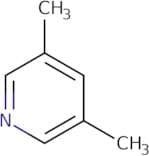
CAS 591-22-0
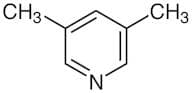
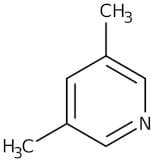
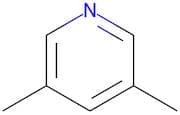
:3,5-Dimethylpyridine
- 3,5-Dimethyl-Pyridine
- 3,5-Dimethylpyridin
- 3,5-Dimethylpyridine
- 3,5-Dimetilpiridina
- 3,5-L
- Lutidine
- Nsc 60736
- Pyridine,3,5-Dimethyl-
- 3,5-Lutidine
- 3 5-LUTIDINE STANDARD FOR GC
- 3,5-dimethyl-pyridin
- 3,5-Lutidine,99%
- 3,5-LUTIDINE, 98+%
- 3,5-Dimetylpyridine
- 3,5-DIMETHYLPYRIDINE 98+%
- Lutidine,98%
- 35L
- See more synonyms
3,5-Lutidine
CAS:Formula:C7H9NPurity:>98.0%(GC)Color and Shape:Colorless to Light yellow clear liquidMolecular weight:107.163,5-Lutidine, 99%
CAS:This Thermo Scientific Chemicals brand product was originally part of the Alfa Aesar product portfolio. Some documentation and label information may refer to the legacy brand. The original Alfa Aesar product / item code or SKU reference has not changed as a part of the brand transition to Thermo SciFormula:C7H9NPurity:99%Color and Shape:Clear colorless to yellow, LiquidMolecular weight:107.163,5-Dimethylpyridine
CAS:3,5-DimethylpyridineFormula:C7H9NPurity:99%Color and Shape:Colourless LiquidMolecular weight:107.153063,5-Lutidine
CAS:Controlled ProductApplications 3,5-Lutidine is a reactant used in the synthesis of phthalazine and pyrazine compounds, as well as other pharmaceuticals.
References Mori, M. et al.: J. Chem. Eng. Data., 61, 370 (2016); Zhou, X. et al.: J. Org. Chem., 81, 25 (2016);Formula:C7H9NColor and Shape:NeatMolecular weight:107.153,5-Lutidine
CAS:3,5-Lutidine is a hydroxy derivative of lutidine that has coordination properties. It is a molecule with three nitrogen atoms and two hydrogen atoms that form hydrogen bonding interactions. 3,5-Lutidine is also a copper complex with a nucleophilic substitutions reaction. The thermal expansion coefficient for 3,5-lutidine has been measured at 0.065/°C between 20 and 100°C, which is higher than the corresponding value for water vapor (0.006/°C). The boiling point for 3,5-lutidine is 325°C, which is lower than the temperature at which water vapor boils (374°C). 3,5-Lutidine can be used in cationic polymerization reactions because it contains an ionic bond to the nitrogen atom. This reaction solution forms an ammonium salt as its product.br>br> 3,5-Lutidine can also be used to treat
Formula:C7H9NPurity:Min. 95%Molecular weight:107.15 g/mol