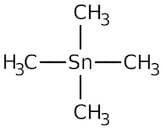
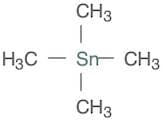
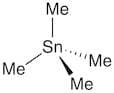
CAS 594-27-4
:Tetramethyltin
- Tetramethyl tin
- Tetramethyletain
- Tetramethylstannan
- Tetramethylstannane
- Tetramethyltin
- Tetramethylzinn
- Tetrametilestano
- Tin, Tetramethyl-
- AI3-28458
- 4-04-00-04307 (Beilstein Handbook Reference)
- BRN 3647887
- Tetramethylcin
- Stannane, tetramethyl-
- Tetramethylcin [Czech]
- See more synonyms
Tetramethyltin, 98%
CAS:This Thermo Scientific Chemicals brand product was originally part of the Alfa Aesar product portfolio. Some documentation and label information may refer to the legacy brand. The original Alfa Aesar product / item code or SKU reference has not changed as a part of the brand transition to Thermo SciFormula:C4H12SnPurity:98%Color and Shape:Clear colorless, LiquidMolecular weight:178.85Tetramethylstannane
CAS:Applications Tetramethylstannane is used in preparation of Biphenyl Pyrazines as PD-1/PD-L1 inhibitors for treating cancer.
References Aktoudianakis, E., et al.: PCT Int. Appl., (2019);Formula:C4H12SnColor and Shape:Colourless OilMolecular weight:178.848TETRAMETHYLTIN
CAS:ALD Material
Atomic layer deposition (ALD) is a chemically self-limiting deposition technique that is based on the sequential use of a gaseous chemical process. A thin film (as fine as -0.1 Å per cycle) results from repeating the deposition sequence as many times as needed to reach a certain thickness. The major characteristic of the films is the resulting conformality and the controlled deposition manner. Precursor selection is key in ALD processes, namely finding molecules which will have enough reactivity to produce the desired films yet are stable enough to be handled and safely delivered to the reaction chamber.
Tetramethyltin; Tetramethylstannane
ΔHcomb: 903.5 kcal/molΔHform, gas, 27 °: -13.6 kcal/mol ΔHvap: 6.8 kcal/molSn-Me bond dissociation energy: 227 kJ/molEa, pyrolysis: 41.1 kcal/molVapor pressure, -21 °C: 10 mmVapor pressure, 20 °C: 90 mmAllows synthesis of even numbered alkanesConverts acid chlorides to methyl ketones with benzylchlorobis(triphenyl phosphine)palladiumForms aryl methyl ketones from aryl halides and CO in the presence of dicarbonylbis(triphenylphosphine)nickelFor CVD of tin oxide transparent conductive electrodes on glass for photovoltaics and sensorsPyrolyzed in vacuum to tin at 600-750 °CPyrolyzed oxidatively to SnO at 350-600 °CForms transparent conductive oxides for photovoltaics by Plasma-enhanced chemical vapor deposition (PECVD)Higher purity grade available, SNT7560.1Formula:C4H12SnPurity:97%Color and Shape:Colourless LiquidMolecular weight:178.83Tetramethyltin, 98%
CAS:Formula:Sn(CH3)4Purity:98%Color and Shape:colorless liq.Molecular weight:178.83