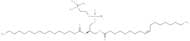
CAS 59491-62-2
:L-A-phosphatidyl choline B-palmitoyl-*gamma-oleoy
Description:
L-A-phosphatidyl choline B-palmitoyl-*gamma-oleoyl, with the CAS number 59491-62-2, is a phospholipid that plays a crucial role in cellular membranes. This compound is characterized by its amphiphilic nature, possessing both hydrophilic (water-attracting) and hydrophobic (water-repelling) regions, which allows it to form bilayers essential for membrane structure. The presence of palmitoyl and gamma-oleoyl fatty acid chains contributes to its fluidity and stability within biological membranes. Phosphatidylcholine is a key component of cell membranes and is involved in various biological processes, including cell signaling and lipid metabolism. Additionally, it serves as a source of choline, which is vital for neurotransmitter synthesis and overall cellular function. This phospholipid is commonly found in both plant and animal tissues and is often utilized in research and pharmaceutical applications due to its biocompatibility and role in drug delivery systems. Its unique structural properties make it an important subject of study in biochemistry and molecular biology.
Formula:C42H83NO8P
InChI:InChI=1/C42H82NO8P/c1-6-8-10-12-14-16-18-20-21-23-24-26-28-30-32-34-41(44)48-38-40(39-50-52(46,47)49-37-36-43(3,4)5)51-42(45)35-33-31-29-27-25-22-19-17-15-13-11-9-7-2/h20-21,40H,6-19,22-39H2,1-5H3/p+1/b21-20-
Synonyms:- (18Z)-7-(hexadecanoyloxy)-4-hydroxy-N,N,N-trimethyl-10-oxo-3,5,9-trioxa-4-phosphaheptacos-18-en-1-aminium 4-oxide
Sort by
Purity (%)
0
100
|
0
|
50
|
90
|
95
|
100
Found 3 products.
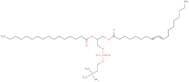
1-[CIS-9-OCTADECENOYL]-2-HEXADECANOYL-SN-GLYCERO-3-PHOSPHOCHOLINE
CAS:Formula:C42H82NO8PPurity:95%Molecular weight:760.07611-Oleoyl-2-palmitoyl-sn-glycero-3-PC
CAS:1-Oleoyl-2-palmitoyl-sn-glycero-3-phosphatidylcholine (PC), originating from oleic acid, is utilized in the synthesis of liposomes [1].Formula:C42H82NO8PColor and Shape:SolidMolecular weight:760.0818:1-16:0 PC
CAS:18:1-16:0 PC is a fatty acid that is used as a connector in on-line monitoring of the activity of hydroxyl group and cavity. It is also used as an antimicrobial agent to prevent the growth of bacteria, fungi, and protozoans. 18:1-16:0 PC has been shown to inhibit the enzyme activities of caco-2 cells. This inhibition is due to its ability to form hydrogen bonds with hydroxyl groups and cavities. The frequency shift of light signal from 18:1-16:0 PC has been shown to be dependent on its length, which can be measured using optical spectroscopy. The diameter of 18:1-16:0 PC has been shown to be dependent on its length, which can be measured using optical microscopy.Formula:C42H82NO8PPurity:Min. 95%Molecular weight:760.08 g/mol
![1-[CIS-9-OCTADECENOYL]-2-HEXADECANOYL-SN-GLYCERO-3-PHOSPHOCHOLINE](/_next/image/?url=https%3A%2Fstatic.cymitquimica.com%2Fproducts%2FIN%2Fthumb%2FDA00EI8P.jpg&w=3840&q=75)