CAS 5956-60-5
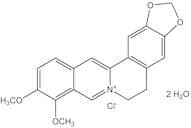
:Berberine chloride dihydrate
Description:
Berberine chloride dihydrate is a quaternary ammonium salt derived from the alkaloid berberine, which is commonly found in various plants, including goldenseal and barberry. It is characterized by its bright yellow color and is known for its potential pharmacological properties, including antimicrobial, anti-inflammatory, and antidiabetic effects. The dihydrate form indicates that the compound contains two molecules of water for each molecule of berberine chloride, which can influence its solubility and stability. Berberine chloride dihydrate is typically soluble in water and alcohol, making it suitable for various applications in pharmaceuticals and herbal medicine. Its mechanism of action involves modulation of several biochemical pathways, including those related to glucose metabolism and lipid regulation. Additionally, it has been studied for its potential role in gut health and microbiome modulation. However, like many bioactive compounds, its efficacy and safety depend on dosage and individual health conditions, necessitating further research to fully understand its therapeutic potential and mechanisms.
Formula:C20H22ClNO6
InChI:InChI=1/C20H18NO4.ClH.2H2O/c1-22-17-4-3-12-7-16-14-9-19-18(24-11-25-19)8-13(14)5-6-21(16)10-15(12)20(17)23-2;;;/h3-4,7-10H,5-6,11H2,1-2H3;1H;2*1H2/q+1;;;/p-1
Synonyms:- 5,6-Dihydro-9,10-dimethoxybenzo(g)-1,3-benzodioxolo(5,6-a)quinolizinium chloride dihydrate
- Berberine hydrochloride bihydrate
- Benzo(g)-1,3-benzodioxolo(5,6-a)quinolizinium, 5,6-dihydro-9,10-dimethoxy-, chloride, dihydrate
- 9,10-Dimethoxy-5,6-Dihydro[1,3]Dioxolo[4,5-G]Isoquino[3,2-A]Isoquinolin-7-Ium Chloride Hydrate (1:1:2)
Sort by
Purity (%)
0
100
|
0
|
50
|
90
|
95
|
100
Found 2 products.
Berberine chloride dihydrate
CAS:Natural alkaloidFormula:C20H18NO4ClH2OPurity:≥ 95.0 % (HPLC)Color and Shape:PowderMolecular weight:407.85Berberine chloride dihydrate
CAS:Berberine chloride dihydrate is an isoquinoline alkaloid compound, which is a bioactive chemical primarily derived from various plants such as Berberis, Coptis, and Hydrastis. It functions through multiple biochemical pathways, most notably by activating AMP-activated protein kinase (AMPK) and modulating gut microbiota, thus exerting its systemic effects.Formula:C20H22ClNO6Purity:Min. 95%Molecular weight:407.8 g/mol