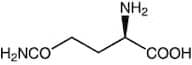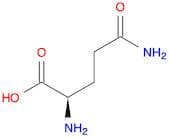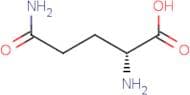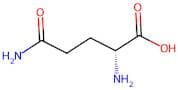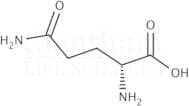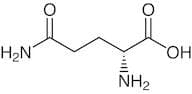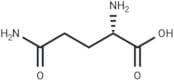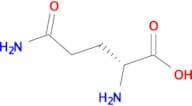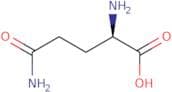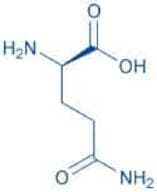
CAS 5959-95-5
:D(-)-Glutamine
Description:
D(-)-Glutamine, with the CAS number 5959-95-5, is an amino acid that serves as a building block for proteins and plays a crucial role in various metabolic processes. It is the D-enantiomer of glutamine, which is a non-essential amino acid commonly found in the body. D(-)-Glutamine is characterized by its ability to participate in nitrogen metabolism and is involved in the synthesis of nucleotides and neurotransmitters. It is soluble in water and exhibits a neutral pH in solution. This amino acid is important for cellular functions, particularly in the immune system and in maintaining the integrity of the intestinal lining. D(-)-Glutamine is often used in research and clinical settings, particularly in studies related to metabolism, cell signaling, and nutrition. Its stability and reactivity make it a valuable compound in biochemical applications. However, it is important to note that the L-form of glutamine is more prevalent in biological systems, and the D-form is less commonly encountered in nature.
Formula:C5H10N2O3
InChI:InChI=1/C5H10N2O3/c6-3(5(9)10)1-2-4(7)8/h3H,1-2,6H2,(H2,7,8)(H,9,10)/t3-/m1/s1
InChI key:InChIKey=ZDXPYRJPNDTMRX-GSVOUGTGSA-N
SMILES:[C@@H](CCC(N)=O)(C(O)=O)N
Synonyms:- (2R)-2-Amino-4-carbamoylbutanoic acid
- (2R)-5-Amino-2-azaniumyl-5-oxopentanoate
- (R)-2,5-Diamino-5-oxopentanoic acid
- <span class="text-smallcaps">D</span>-Glutamine
- D(-)-Glutamic acid-5-amide
- D-Gln-OH
- Glutamine, <span class="text-smallcaps">D</span>-
- H-D-Gln-OH
- Glutamine, D-
- D-Glutamine
- D-2-Aminoglutaramic acid, D-Glutamic acid 5-amide
- D-Glutamine (9CI)
- D-Gln
- Glutamine,D-(8Cl)
- D-2-AMINOGLUTARAMIC ACID
- (2R)-2-amino-4-carbamoyl-butanoic acid
- Citric Acid, Monohydrate, Crystal, Reagent
- (R)-2-AMINO-4-CARBAMOYL-BUTYRIC ACID
- D-GLUTAMINE extrapure
- See more synonyms
Sort by
Purity (%)
0
100
|
0
|
50
|
90
|
95
|
100
Found 13 products.
D-Glutamine, 99+%
CAS:Kinase inhibitor; has antivasospastic propertiesFormula:C5H10N2O3Purity:99+%Color and Shape:White, Powder or crystals or crystalline powderMolecular weight:146.15(2R)-2,5-diamino-5-oxo-pentanoic acid
CAS:(2R)-2,5-diamino-5-oxo-pentanoic acidPurity:98%Molecular weight:146.14g/molD-Glutamine
CAS:Formula:C5H10N2O3Purity:≥ 98.0%Color and Shape:White or almost white crystalline powderMolecular weight:146.14D-Glutamine
CAS:Formula:C5H10N2O3Purity:>98.0%(T)Color and Shape:White to Almost white powder to crystalMolecular weight:146.15D-glutamine
CAS:D-glutamine, an D type stereoisomer of glutamine, is one of the 20 amino acids which is encoded by the standard genetic code.Formula:C5H10N2O3Purity:99.99%Color and Shape:White Or Off-White PowderMolecular weight:146.14H-D-Gln-OH
CAS:M02933 - H-D-Gln-OH
Formula:C5H10N2O3Purity:97%Color and Shape:SolidMolecular weight:146.146D-Glutamine extrapure, 99%
CAS:Formula:C5H10N2O3Purity:min. 99%Color and Shape:White, Crystalline powder, Clear, ColourlessMolecular weight:146.2D-Glutamine
CAS:D-Glutamine is the most abundant amino acid in the body and is important for protein synthesis. It is used to activate transcription and as a source of energy for cells, especially in times of oxidative stress. D-Glutamine can be used to treat diseases caused by infectious agents, such as listeriosis, bacterial sepsis, and viral encephalitis. D-Glutamine also has been shown to reduce neuronal death and improve memory function in animal models. D-Glutamine can be synthesized from l-glutamine by an enzyme called glutaminase. This reaction requires ATP hydrolysis and produces glutamate, which then reacts with ammonia to form glutamine. In this way, it is possible to bypass the need for dietary intake of glutamine. Glutamines are also classified as biocompatible polymers because they do not elicit a strong immune response or cause inflammation when introduced into the body.Formula:C5H10N2O3Purity:Min. 95%Color and Shape:White PowderMolecular weight:146.14 g/molH-D-Gln-OH
CAS:Bachem ID: 4007503.
Formula:C5H10N2O3Purity:> 99%Color and Shape:White PowderMolecular weight:146.15