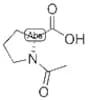
CAS 59785-68-1
:Ac-D-Pro-OH
Description:
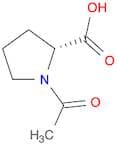
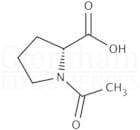
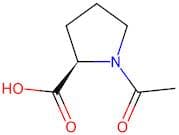
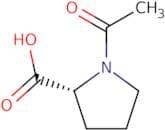
Ac-D-Pro-OH, also known as Acetyl-D-Proline, is a chemical compound characterized by its structure as a derivative of proline, an amino acid. It features an acetyl group attached to the nitrogen of the proline ring, which enhances its solubility and stability compared to its parent amino acid. This compound is typically used in peptide synthesis and as a building block in the development of pharmaceuticals and biologically active molecules. Ac-D-Pro-OH exhibits properties such as chirality, as proline is a chiral amino acid, leading to distinct optical isomers. Its molecular interactions are influenced by the presence of the acetyl group, which can affect hydrogen bonding and steric hindrance. Additionally, Ac-D-Pro-OH may exhibit biological activity, making it of interest in medicinal chemistry and research related to peptide-based therapeutics. Safety and handling considerations should be observed, as with any chemical substance, to ensure proper laboratory practices.
Formula:C7H11NO3
InChI:InChI=1/C7H11NO3/c1-5(9)8-4-2-3-6(8)7(10)11/h6H,2-4H2,1H3,(H,10,11)/t6-/m1/s1
SMILES:CC(=O)N1CCC[C@@H]1C(=O)O
Synonyms:- 1-acetyl-D-proline
- N-acetyl-D-Proline
Sort by
Purity (%)
0
100
|
0
|
50
|
90
|
95
|
100
Found 5 products.
N-Acetyl-D-Proline
CAS:N-Acetyl-D-proline is a ligand that binds to the calcium ion. It has been shown to enhance the cross-linking of collagen, elastin, and other proteins. N-Acetyl-D-proline is also used as a crosslinking agent for polymers such as silicone rubber and epoxy resin. This compound can be found in devices such as connectors, valves, and pipes. N-Acetyl-D-proline can be used as a ligand to bind cphpc (carbon paste), which is an important component of membranes in fuel cells.
Formula:C7H11NO3Purity:Min. 95%Molecular weight:157.17 g/mol