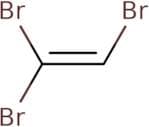
CAS 598-16-3
:1,1,2-Tribromoethene
- 1,1,2-Tribromoethene
- 1,1,2-Tribromoethylene
- Brn 1736791
- Ethene, 1,1,2-tribromo-
- Ethene, tribromo-
- Ethylene tribromide
- Ethylene, tribromo-
- Ethylene, tribromo- (VAN) (8CI)
- Nsc 343621
- Tribromoethene
- 4-01-00-00722 (Beilstein Handbook Reference)
- See more synonyms
Tribromoethylene
CAS:Formula:C2HBr3Purity:>97.0%(GC)Color and Shape:Colorless to Light yellow to Light orange clear liquidMolecular weight:264.74Tribromoethylene
CAS:Tribromoethylene is a reactive, hydroxyl-containing compound that has been used as a cross-linking agent in the production of polymers. It is a colorless liquid with an unpleasant odor. Tribromoethylene has many uses including as an antioxidant and a stabilizer for rubber, plastics, and paints. In addition to its use as a reactive functional group, tribromoethylene also has long-term toxicity in CD-1 mice. This toxicity may be due to the ability of tribromoethylene to produce epoxides through oxidation by hydrogen fluoride or other peroxides. Epoxides are known to disrupt cellular energy metabolism and cause cell death by reacting with lysine residues on proteins. The mechanism for this toxicity is not well understood but may involve cross-linking of proteins and DNA.
Formula:C2HBr3Purity:Min. 95%Molecular weight:264.74 g/mol