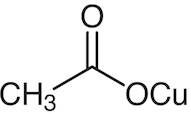
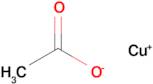
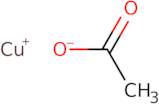
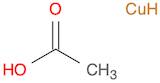
CAS 598-54-9
:Cuprous acetate
Description:
Cuprous acetate, also known as copper(I) acetate, is an inorganic compound with the formula CuC2H3O2. It appears as a blue-green solid and is characterized by its relatively low solubility in water, although it can dissolve in organic solvents. This compound is typically formed through the reaction of copper(I) oxide with acetic acid. Cuprous acetate is known for its role as a catalyst in various organic reactions, particularly in the synthesis of organic compounds and in polymerization processes. It exhibits properties typical of copper(I) compounds, including a tendency to oxidize to cupric forms in the presence of air. Additionally, cuprous acetate can act as a reducing agent and is utilized in the preparation of other copper compounds. Safety precautions should be taken when handling this substance, as it can be toxic and may cause irritation upon contact with skin or eyes. Proper storage in a cool, dry place away from incompatible materials is recommended to maintain its stability.
Formula:C2H4O2·Cu
InChI:InChI=1S/C2H4O2.Cu/c1-2(3)4;/h1H3,(H,3,4);
InChI key:InChIKey=UMRSVAKGZBVPKD-UHFFFAOYSA-N
SMILES:C(C)(O)=O.[Cu]
Synonyms:- Acetic acid, copper(1+) salt
- Acetic acid, copper(1+) salt (1:1)
- Copper acetate (CuOAc)
- Copper monoacetate
- Copper(1+) acetate
- Cuprous acetate
Filter by
Purity percentage
0
100
|
0
|
50
|
90
|
95
|
100
Found 6 products.
- Lower prices
- Higher prices
- Lower purities
- Higher purities
- Faster estimated delivery
Copper(I) Acetate
CAS:Formula:C2H3CuO2Purity:>93.0%(T)Color and Shape:Light yellow to Brown to Dark green powder to crystalMolecular weight:122.59Copper(I) acetate, 97%
CAS:Copper(I) acetate, 97%
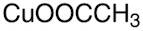
Formula:CuOOCCH3Purity:97%Color and Shape:beige to light green pwdr.Molecular weight:122.59Copper(I) acetate
CAS:Copper(I) acetateFormula:·C2H3O2·CuPurity:≥95%Color and Shape:Pale green Solid-PowderMolecular weight:122.59002Copper(I) acetate
CAS:Copper acetate is a coordination compound that contains copper and acetate ions. Copper acetate has a redox potential of -0.7 V, which is higher than that of ferrous iron (-0.4 V). The reaction mechanism for the formation of copper acetate is as follows:Formula:C2H4O2·CuPurity:Min. 95%Color and Shape:White PowderMolecular weight:123.6 g/mol