CAS 60-32-2
:6-Aminohexanoic acid
Description:
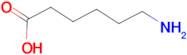
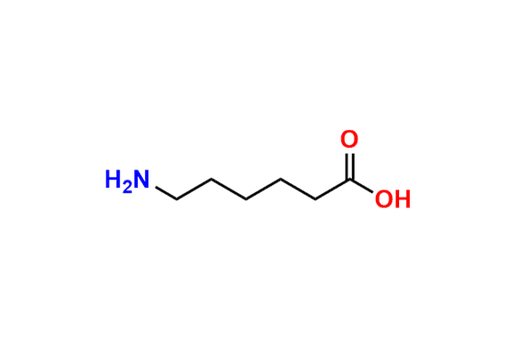
6-Aminohexanoic acid, also known as ε-aminocaproic acid, is a six-carbon amino acid with the molecular formula C6H13NO2. It features an amino group (-NH2) and a carboxylic acid group (-COOH) on its carbon chain, making it a versatile compound in biochemical applications. This colorless, crystalline solid is soluble in water and exhibits a slightly acidic nature due to its carboxylic acid group. 6-Aminohexanoic acid is primarily used in the synthesis of polyamides, particularly nylon-6, and serves as a building block in various chemical reactions. Additionally, it has applications in medicine, particularly as an antifibrinolytic agent to reduce bleeding during surgery. The compound is generally regarded as safe when used appropriately, but it can cause side effects in some individuals. Its structural properties allow it to participate in various biochemical pathways, making it significant in both industrial and pharmaceutical contexts.
Formula:C6H13NO2
InChI:InChI=1S/C6H13NO2/c7-5-3-1-2-4-6(8)9/h1-5,7H2,(H,8,9)
InChI key:InChIKey=SLXKOJJOQWFEFD-UHFFFAOYSA-N
SMILES:C(CC(O)=O)CCCN
Synonyms:- 177 J.D.
- 6-Amino-n-hexanoic acid
- 6-Aminohexanoate
- 6-Aminohexanoic acid
- A 14719
- ACS
- Acepramin
- Acepramine
- Acide aminocaproique
- Acido Aminocaproico
- Acikaprin
- Afibrin
- Amicar
- Amikar
- Aminocaproic acid
- Aminocapronsaure
- Aminokapron
- An 0064-1
- Caplamin
- Capramol
- Caprocid
- Caproic acid, ε-amino-
- Caprolisin
- Cl 10304
- Cy 116
- E-Aminocaproic Acid
- Eaca
- Eacs
- Epsamon
- Epsicapron
- Epsikapron
- Epsilcapramin
- Epsilon S
- Epsilon-Aminocapronsaeure
- H-6-Aca-OH
- H-6-Ahx-OH
- H-EAhx-OH
- Hemocaprol
- Hemopar
- Hepin
- Hexanoic acid, 6-amino-
- Ipsilon
- Nsc 212532
- Nsc 26154
- Nsc 400230
- Respramin
- epsilon-Aminocaproic acid
- ε-Amino-n-caproic acid
- ε-Amino-n-hexanoic acid
- ε-Aminohexanoic acid
- ε-Leucine
- ε-Norleucine
- ω-Aminocaproic acid
- See more synonyms
Filter by
Purity percentage
0
100
|
0
|
50
|
90
|
95
|
100
- Lower prices
- Higher prices
- Lower purities
- Higher purities
- Faster estimated delivery
6-Aminocaproic Acid extrapure, 99%
CAS:Formula:C6H13NO2Purity:min. 99%Color and Shape:White, Crystalline powder, Clear, ColourlessMolecular weight:131.17Aminocaproic Acid IP
CAS:Formula:C6H13NO2Purity:98.5 - 101.0%Color and Shape:Colourless or white, Crystals, crystalline powder, 20% aq. solution clear and colourless for 24 hrs.Molecular weight:131.17Aminocaproic Acid BP, 98.5-101%
CAS:Formula:C6H13NO2Purity:98.5 - 101.0%Color and Shape:Whiteor almost white , Colourless, Crystalline powder, Crystals, Clear on standing standing 24hrs., Colourless, Solution S is colourless and remains clear on standing 24 hrs.Molecular weight:131.17Aminocaproic Acid USP, 98.5-101%
CAS:Formula:C6H13NO2Purity:98.5 -101.5% (On anhydrous bassis)Color and Shape:White or almost white , colourless, Crystalline powder or crystalsMolecular weight:131.17Aminocaproic acid
CAS:Aminocaproic acid is a non-specific lysing agent that is used in the treatment of acute blood clots. Aminocaproic acid has minimal toxicity and low-dose effects, and can be used for the treatment of thrombotic disorders. It also has biological properties that are different from those of aminocaproate, which can lead to a more rapid dissolution of the clot. Aminocaproic acid is an organic compound that belongs to the class of dicarboxylic acids. It is synthesized from two molecules of aminoacetic acid by the enzyme aminocaproic acid synthetase. The synthesis occurs in a two-step process: first, caprylic acid reacts with ATP to form aminopropyl-adenylate (APA), followed by hydrolysis by APA lyase to form aminocaproic acid.Formula:C6H13NO2Color and Shape:PowderMolecular weight:131.17 g/molRef: 3D-FA08324
Discontinued product