CAS 6001-76-9
:chlorogenic acid hemihydrate
Description:
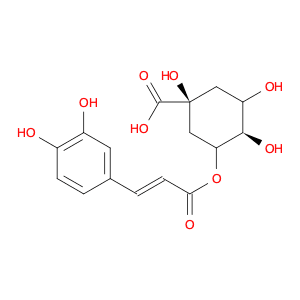
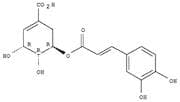
Chlorogenic acid hemihydrate, with the CAS number 6001-76-9, is a phenolic compound primarily found in various plants, particularly in coffee beans. It is a derivative of caffeic acid and quinic acid, and it is known for its antioxidant properties. This compound typically appears as a white to off-white crystalline powder and is soluble in water, which facilitates its extraction from plant materials. Chlorogenic acid is recognized for its potential health benefits, including anti-inflammatory and anti-diabetic effects, and it plays a role in the regulation of glucose metabolism. In addition to its biological significance, chlorogenic acid is also studied for its applications in food preservation and as a natural preservative due to its ability to inhibit microbial growth. The hemihydrate form indicates that it contains a specific amount of water in its crystalline structure, which can influence its stability and solubility. Overall, chlorogenic acid hemihydrate is a compound of interest in both nutritional science and pharmacology.
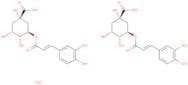
Formula:C32H38O19
InChI:InChI=1/2C16H18O9.H2O/c2*17-9-3-1-8(5-10(9)18)2-4-13(20)25-12-7-16(24,15(22)23)6-11(19)14(12)21;/h2*1-5,11-12,14,17-19,21,24H,6-7H2,(H,22,23);1H2/b2*4-2+;/t2*11-,12-,14-,16+;/m11./s1
Sort by
Purity (%)
0
100
|
0
|
50
|
90
|
95
|
100
Found 3 products.
Chlorogenic Acid Hemihydrate extrapure, 98%
CAS:Formula:C16H18O9H2OPurity:min. 98.0%Color and Shape:White to pale yellow, Crystalline powder, ClearMolecular weight:363.32Chlorogenic acid hemihydrate
CAS:Chlorogenic acid hemihydrate is a natural phenolic compound that belongs to the family of flavonol glycosides. The molecule has two caffeoylquinic acids and one chlorogenic acid functional groups, which are responsible for its antioxidant properties. Chlorogenic acid hemihydrate is soluble in water and can be used as a solid dispersion. This compound has been shown to have significant interactions with other drugs, including polymeric matrix, protocatechuic acid, and α-amyrin acetate. It also has been shown to have cell culture and in vivo model evidence of efficacy against cancer cells.
Purity:Min. 95%