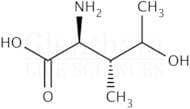
CAS 6001-78-8
:4-Hydroxyisoleucine
Description:
4-Hydroxyisoleucine is a naturally occurring amino acid derivative, primarily found in the seeds of the legume Mucuna pruriens. It is classified as a non-proteinogenic amino acid, meaning it is not incorporated into proteins during translation. This compound is notable for its potential health benefits, particularly in the context of metabolic regulation and insulin sensitivity. 4-Hydroxyisoleucine is known to enhance insulin secretion in response to glucose, making it of interest in diabetes research. The substance is characterized by its hydroxyl group, which contributes to its solubility in water and its reactivity. It has been studied for its role in promoting muscle growth and fat loss, as well as its potential antioxidant properties. The molecular structure includes a branched-chain configuration, typical of isoleucine derivatives, which influences its biological activity. Overall, 4-Hydroxyisoleucine is a compound of significant interest in nutritional science and pharmacology, with ongoing research exploring its therapeutic applications.
Formula:C6H13NO3
InChI:InChI=1/C6H13NO3/c1-3(4(2)8)5(7)6(9)10/h3-5,8H,7H2,1-2H3,(H,9,10)
SMILES:CC(C(C)O)C(C(=O)O)N
Synonyms:- 4-Hydroxy-L-isoleucine
- 2-Amino-4-Hydroxy-3-Methylpentanoic Acid (Non-Preferred Name)
- (2S,3R)-2-Amino-4-hydroxy-3-methylpentanoic acid
- L-erythro-Pentonic acid, 2-amino-2,3,5-trideoxy-3-methyl-, (4ξ)-
- L-4-Hydroxyisoleucine
- (4S)-4-Hydroxy-L-isoleucine
Sort by
Purity (%)
0
100
|
0
|
50
|
90
|
95
|
100
Found 2 products.
Corosolic acid
CAS:Corosolic acid, a natural compound found in the bark of the Chinese Corosolic tree, has been shown to have hypoglycemic effects in mice. This compound inhibits the activity of glucose-6-phosphatase and phosphoenolpyruvate carboxykinase (PEPCK), two enzymes responsible for gluconeogenesis. Corosolic acid also stimulates insulin release from pancreatic β cells by activating protein kinase B (also called Akt) and inhibiting protein kinase C. These effects are mediated through modulation of target enzymes such as protein kinases A and C, glycogen synthase kinase 3β, and GSK3β. The molecular docking analysis has shown that corosolic acid binds to these enzymes with high affinity.Formula:C30H48O4Purity:Min. 95%Molecular weight:472.7 g/mol