CAS 601-84-3
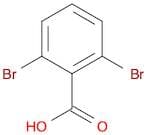
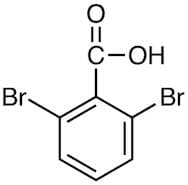
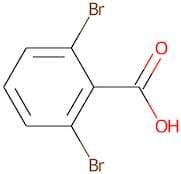
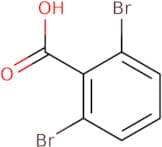
:2,6-Dibromobenzoic acid
Description:
2,6-Dibromobenzoic acid is an aromatic carboxylic acid characterized by the presence of two bromine substituents at the 2 and 6 positions of the benzoic acid structure. This compound typically appears as a white to off-white crystalline solid and is known for its relatively low solubility in water, while being more soluble in organic solvents. It has a melting point that is generally in the moderate range, indicative of its crystalline nature. The presence of bromine atoms contributes to its reactivity, making it useful in various chemical synthesis applications, including the production of pharmaceuticals and agrochemicals. Additionally, 2,6-dibromobenzoic acid can participate in electrophilic aromatic substitution reactions due to the electron-withdrawing nature of the carboxylic acid group and the bromine substituents. Safety data indicates that it should be handled with care, as it may pose health risks upon exposure. Overall, 2,6-dibromobenzoic acid is a valuable compound in organic chemistry with diverse applications.
Sort by
Purity (%)
0
100
|
0
|
50
|
90
|
95
|
100
Found 5 products.
2,6-Dibromobenzoic acid
CAS:Formula:C7H4Br2O2Purity:98%Color and Shape:SolidMolecular weight:279.9135Ref: IN-DA003310
1g27.00€5g52.00€10g73.00€1kgTo inquire25g132.00€100g491.00€500gTo inquire100mg25.00€250mg25.00€2,6-Dibromobenzoic Acid
CAS:Formula:C7H4Br2O2Purity:>98.0%(GC)(T)Color and Shape:White to Light yellow to Light orange powder to crystalMolecular weight:279.922,6-Dibromobenzoic acid
CAS:2,6-Dibromobenzoic acidPurity:98%Color and Shape:SolidMolecular weight:279.91g/mol2,6-Dibromobenzoic acid
CAS:2,6-Dibromobenzoic acid is a synthetic molecule that can be used to synthesize pyrrole derivatives in the presence of a base. It has been shown to react with a number of molecules, including halogens and chlorides. The active site of 2,6-dibromobenzoic acid is its bromine atom. The steric interactions between the 2,6-dibromobenzoic acid molecule and the substrate are strong enough to prevent other molecules from accessing the active site. Chlorides and diphenylmethane can also bind to 2,6-dibromobenzoic acid due to their similar properties. This molecule has also been shown to interact with aluminium and solvents such as ethanol or acetone.Formula:C7H4Br2O2Purity:Min. 95%Color and Shape:White PowderMolecular weight:279.91 g/mol