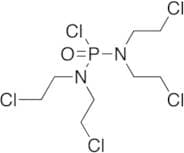
CAS 60106-92-5
:tetrakis(2-chloroethyl)phosphorodiamidic chloride
Description:
Tetrakis(2-chloroethyl)phosphorodiamidic chloride, with the CAS number 60106-92-5, is a chemical compound characterized by its phosphorus-containing structure, which includes four 2-chloroethyl groups attached to a phosphorodiamide backbone. This compound is typically a white to off-white solid and is soluble in polar organic solvents. It exhibits properties typical of phosphorodiamides, including potential applications in agriculture as a pesticide or herbicide due to its ability to interact with biological systems. The presence of chlorine atoms in the 2-chloroethyl groups contributes to its reactivity and potential toxicity, necessitating careful handling and storage. Additionally, the compound may undergo hydrolysis in the presence of moisture, leading to the release of hydrochloric acid and other byproducts. As with many phosphorus-containing compounds, it is important to consider its environmental impact and regulatory status when evaluating its use in various applications. Safety data sheets should be consulted for specific handling and exposure guidelines.
Formula:C8H16Cl5N2OP
InChI:InChI=1/C8H16Cl5N2OP/c9-1-5-14(6-2-10)17(13,16)15(7-3-11)8-4-12/h1-8H2
SMILES:C(CN(CCCl)P(=O)(Cl)N(CCCl)CCCl)Cl
Synonyms:- N,N,N',N'-tetrakis(2-chloroethyl)phosphorodiamidic chloride
Sort by
Purity (%)
0
100
|
0
|
50
|
90
|
95
|
100
Found 3 products.
Tetrakis(2-chloroethyl)phosphorodiamidic Chloride
CAS:Controlled ProductFormula:C8H16Cl5N2OPColor and Shape:NeatMolecular weight:364.464Tetrakis(2-chloroethyl)phosphorodiamidic chloride
CAS:Tetrakis(2-chloroethyl)phosphorodiamidic chloride is an anticancer agent that targets kinases in human tumor cells. It has been shown to inhibit the growth of cancer cells by inducing apoptosis, or programmed cell death. This compound is a potent inhibitor of protein kinases and has been used as an analog for studying the activity of kinase inhibitors. Tetrakis(2-chloroethyl)phosphorodiamidic chloride has also been found in urine samples from patients undergoing chemotherapy with dapoxetine, suggesting its potential use as a biomarker for cancer treatment. Overall, this compound shows promise as a valuable tool in cancer research and therapy.Formula:C8H16Cl5N2OPPurity:Min. 95%Molecular weight:364.5 g/mol