CAS 60187-00-0
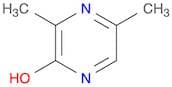
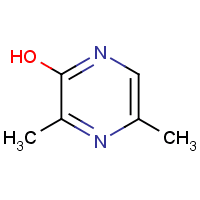
:3,5-dimethylpyrazin-2-ol
Description:
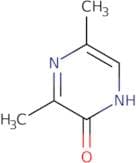
3,5-Dimethylpyrazin-2-ol is an organic compound characterized by its pyrazine ring, which is a six-membered aromatic heterocycle containing two nitrogen atoms. The presence of two methyl groups at the 3 and 5 positions and a hydroxyl group at the 2 position contributes to its unique chemical properties. This compound is typically a colorless to pale yellow liquid or solid, depending on its form and purity. It is soluble in polar solvents like water and alcohols, which is attributed to the hydroxyl group that can engage in hydrogen bonding. 3,5-Dimethylpyrazin-2-ol exhibits biological activity, making it of interest in various fields, including pharmaceuticals and agrochemicals. Its structure allows for potential interactions with biological systems, which can lead to various applications. Additionally, it may possess distinct odor characteristics, often described as earthy or musty, which can be relevant in flavor and fragrance industries. As with many organic compounds, safety and handling precautions should be observed due to potential toxicity or reactivity.
Formula:C6H8N2O
InChI:InChI=1/C6H8N2O/c1-4-3-7-6(9)5(2)8-4/h3H,1-2H3,(H,7,9)
SMILES:Cc1c[nH]c(=O)c(C)n1
Synonyms:- 2-Pyrazinol, 3,5-Dimethyl-
Sort by
Purity (%)
0
100
|
0
|
50
|
90
|
95
|
100
Found 5 products.
DPO
CAS:DPO is a quorum sensing (QS) self-inducer that binds and activates the transcription factor VQMA.Formula:C6H8N2OColor and Shape:SolidMolecular weight:124.143,5-Dimethylpyrazin-2-ol
CAS:3,5-Dimethylpyrazin-2-ol is a specific ligand that binds to the disulfide bond in the antimicrobial peptide. The 3,5-dimethylpyrazin-2-ol binds to an allosteric site on the protein, which is a region of the protein that is different from the active site. This binding causes an alteration in protein conformation and changes its activity. The 3,5-dimethylpyrazin-2-ol has been shown to bind to dna binding domains and transcriptional regulation architectures. It has also been shown to have biological function and a paradigm shift effect on cellular function and analytical methods.Formula:C6H8N2OPurity:Min. 95%Color and Shape:PowderMolecular weight:124.14 g/mol