CAS 6028-00-8
:Harmalol hydrochloride hydrate
Description:
Harmalol hydrochloride hydrate is a chemical compound derived from harmaline, a naturally occurring alkaloid found in certain plants, particularly in the Peganum harmala species. It is characterized by its molecular formula, which includes a hydrochloride salt form, indicating that it is a hydrochloride salt of harmalol, typically existing as a hydrate. This compound is known for its psychoactive properties and has been studied for its potential effects on the central nervous system, including its role as a monoamine oxidase inhibitor (MAOI). Harmalol hydrochloride hydrate is often used in research settings to explore its pharmacological effects and potential therapeutic applications. In terms of physical properties, it is usually presented as a crystalline solid, and its solubility in water is influenced by the presence of the hydrochloride and hydrate forms. Safety and handling precautions are essential when working with this compound due to its biological activity and potential toxicity.
Formula:C12H17ClN2O3
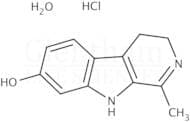
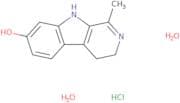
InChI:InChI=1/C12H12N2O.ClH.2H2O/c1-7-12-10(4-5-13-7)9-3-2-8(15)6-11(9)14-12;;;/h2-3,6,14-15H,4-5H2,1H3;1H;2*1H2
SMILES:CC1=NCCc2c3ccc(cc3[nH]c12)O.Cl.O.O
Synonyms:- 1-Methyl-4,9-dihydro-3H-beta-carbolin-7-ol hydrochloride
- 4,9-Dihydro-1-methyl-3H-pyrido[3,4-b]indol-7-ol
- 1-methyl-2,3,4,9-tetrahydro-7H-beta-carbolin-7-one hydrochloride dihydrate
- 1-methyl-4,9-dihydro-3H-beta-carbolin-7-ol hydrochloride dihydrate
Sort by
Purity (%)
0
100
|
0
|
50
|
90
|
95
|
100
Found 2 products.
Harmalol hydrochloride dihydrate
CAS:Controlled ProductHarmalol hydrochloride dihydrate is a natural product that belongs to the class of benzylisoquinoline alkaloids. It has been shown to inhibit the growth of carcinoma cells in cell culture and murine hepatoma, as well as to inhibit the production of reactive oxygen species and mitochondrial membrane potential in these cells. Harmalol hydrochloride dihydrate also inhibits the activity of a number of enzymes, including CYP450 and nitric oxide synthase, which are involved in the metabolism of drugs. Harmalol hydrochloride dihydrate has been shown to bind to response element (CRE) sequences in DNA and regulate gene expression by binding to CRE-binding transcription factors. Harmalol hydrochloride dihydrate may have therapeutic potential as an anticancer agent or for use in drug interactions, due to its ability to inhibit many important enzymes.Formula:C12H12N2O·HCl·2H2OPurity:Min. 95%Color and Shape:PowderMolecular weight:272.73 g/mol