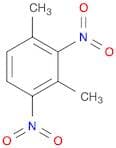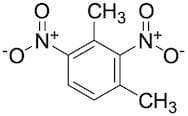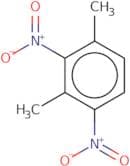
CAS 603-02-1
:1,3-Dimethyl-2,4-dinitrobenzene
Description:
1,3-Dimethyl-2,4-dinitrobenzene, with the CAS number 603-02-1, is an organic compound belonging to the class of dinitrobenzenes. It features a benzene ring substituted with two nitro groups and two methyl groups, specifically at the 2, 4, and 1, 3 positions, respectively. This compound is typically a yellow crystalline solid, exhibiting a relatively high melting point and low solubility in water, but it is soluble in organic solvents such as ethanol and acetone. 1,3-Dimethyl-2,4-dinitrobenzene is known for its use in various chemical syntheses and as an intermediate in the production of dyes and other organic compounds. It is important to note that this substance can be hazardous; it is classified as a potential carcinogen and may pose environmental risks. Proper handling and disposal procedures should be followed to mitigate exposure and environmental impact. Additionally, it is essential to consult safety data sheets (SDS) for detailed information on its properties and safety precautions.
Formula:C8H8N2O4
InChI:InChI=1/C8H8N2O4/c1-5-3-4-7(9(11)12)6(2)8(5)10(13)14/h3-4H,1-2H3
InChI key:InChIKey=XUUSVHGZGPBZLS-UHFFFAOYSA-N
SMILES:N(=O)(=O)C1=C(C)C(N(=O)=O)=CC=C1C
Synonyms:- 1,3-Dimethyl-2,4-Dinitrobenzene
- 2,4-Dimethyl-1,3-dinitrobenzene
- 2,4-Dinitro-1,3-dimethylbenzene
- 2,6-Dinitro-m-xylene
- Benzene, 1,3-dimethyl-2,4-dinitro-
- Brn 2333058
- Ccris 3124
- m-Xylene, 2,4-dinitro-
- 2,4-Dinitro-m-xylene
- 2,4-Dinitro-m-xylene
- 3-05-00-00844 (Beilstein Handbook Reference)
- Lidocaine Impurity 56
- See more synonyms
Sort by
Purity (%)
0
100
|
0
|
50
|
90
|
95
|
100
Found 5 products.
Benzene, 1,3-dimethyldinitro-
CAS:Formula:C8H8N2O4Purity:95%Color and Shape:SolidMolecular weight:196.16012,4-Dinitro-m-xylene
CAS:Controlled ProductFormula:C8H8N2O4Color and Shape:NeatMolecular weight:196.162,4-Dinitro-m-xylene
CAS:2,4-Dinitro-m-xylene is a chemical additive that is used in the preparation of samples for analysis. It converts benzonitrile to 2,4-dinitrobenzene with sodium salts. The electron donor can be either sodium or potassium. The nitrotoluene reacts through an electrolysis process to produce nitronium ions, which react with oxygen in the presence of alkanoic acids to form the desired product. 2,4-Dinitro-m-xylene has been found to be biodegradable and is not toxic to aquatic life. It is also used as a solvent for other organic materials.Formula:C8H8N2O4Purity:Min. 95%Color and Shape:PowderMolecular weight:196.16 g/mol