CAS 60523-73-1
:bromo(dichloro)acetonitrile
Description:
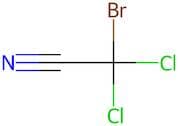
Bromo(dichloro)acetonitrile, with the CAS number 60523-73-1, is a halogenated organic compound characterized by the presence of bromine and chlorine substituents on an acetonitrile backbone. This compound typically appears as a colorless to pale yellow liquid and is known for its reactivity due to the presence of both halogen atoms, which can participate in nucleophilic substitution reactions. It has a relatively low boiling point and is soluble in organic solvents, making it useful in various chemical syntheses. Bromo(dichloro)acetonitrile is often employed in the production of pharmaceuticals and agrochemicals, as well as in research applications. However, it is important to handle this compound with care due to its potential toxicity and environmental impact, as halogenated compounds can pose risks to human health and ecosystems. Proper safety measures, including the use of personal protective equipment and adequate ventilation, are essential when working with this substance.
Formula:C2BrCl2N
InChI:InChI=1/C2BrCl2N/c3-2(4,5)1-6
SMILES:C(#N)C(Br)(Cl)Cl
Synonyms:- 60523-73-1
Sort by
Purity (%)
0
100
|
0
|
50
|
90
|
95
|
100
Found 4 products.
Bromodichloroacetonitrile
CAS:Bromodichloroacetonitrile (BDCAN) is a genotoxic and cytotoxic nitrogen disinfection byproduct found primarily in BDCAN and process wastewater.Formula:C2BrCl2NColor and Shape:SolidMolecular weight:188.84Bromodichloroacetonitrile
CAS:Controlled ProductApplications Disinfection byproducts (DBPs) produced in the chlorination or chloramination of drinking water.
Not a dangerous good if item is equal to or less than 1g/ml and there is less than 100g/ml in the package
References Bull, R., et al.: Toxicol. Appl. Pharmacol., 182, 55 (2002), Mitch, W., et al.: Water Sci. Technol., 2, 191 (2002),Formula:C2BrCl2NColor and Shape:OrangeMolecular weight:188.84Bromodichloroacetonitrile
CAS:Bromodichloroacetonitrile (BCN) is a chemical with disinfectant properties. It is used in wastewater treatment, as it is able to destroy bacteria and viruses. BCN also has been shown to be effective against the Covid-19 pandemic. BCN can be used as an analytical reagent for the analysis of chloride ions in deionized water. The carcinogenic potential of BCN in humans is unknown, but it has been shown to cause bladder cancer in rats.Formula:C2BrCl2NPurity:Min. 95%Color and Shape:Colorless PowderMolecular weight:188.84 g/mol