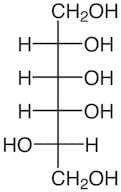
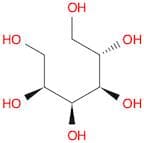
CAS 60660-58-4
:L-Altritol
Description:
L-Altritol, also known as L-altritol or L-altriose, is a sugar alcohol that belongs to the class of polyols. It is a six-carbon alditol derived from the aldose sugar L-altriose. L-Altritol is characterized by its sweet taste, which is less intense than that of sucrose, making it a potential low-calorie sweetener. It is soluble in water, which enhances its utility in various food and pharmaceutical applications. The compound is typically found in a crystalline form and is hygroscopic, meaning it can absorb moisture from the environment. L-Altritol is of interest in the food industry for its potential use in sugar-free and reduced-calorie products, as well as in the development of functional foods. Additionally, it has applications in biochemistry and research, particularly in studies related to carbohydrate metabolism. As with other sugar alcohols, excessive consumption may lead to gastrointestinal discomfort in some individuals. Overall, L-Altritol presents a versatile option in both food science and health-related applications.
Formula:C6H14O6
Synonyms:- L-Talitol
Sort by
Purity (%)
0
100
|
0
|
50
|
90
|
95
|
100
Found 5 products.
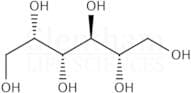
L-Talitol
CAS:Formula:C6H14O6Purity:>98.0%(HPLC)Color and Shape:White to Almost white powder to crystalMolecular weight:182.17(2S,3R,4S,5S)-Hexane-1,2,3,4,5,6-hexaol
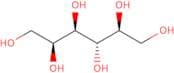
CAS:Formula:C6H14O6Purity:98.0%Color and Shape:SolidMolecular weight:182.1718L-Talitol
CAS:L-Talitol is a naturally occurring sugar alcohol that is found in the human body and in many vegetables, fruits, and grains. It has been shown to be a potent inhibitor of the bacterium Klebsiella aerogenes. L-talitol has been used as a model system to study the effect of matrix on the growth of cells. It has also been shown to have chronic pulmonary effects and to be effective for treating selenium deficiency. L-talitol can inhibit b-raf by binding to the hydroxyl group on its kinase domain and inhibiting downstream signaling pathways. This inhibition leads to reduced levels of transcriptional regulation in cells, which may be due to decreased protein synthesis or increased degradation of mRNA. L-Talitol also inhibits d-talitol dehydrogenase, which results in an increase in d-talitol concentrations in cells.Formula:C6H14O6Purity:Min. 95%Color and Shape:PowderMolecular weight:182.17 g/mol