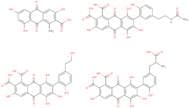
CAS 60687-93-6
:Laccaic acid
Description:
Laccaic acid, with the CAS number 60687-93-6, is a natural organic compound primarily derived from the lac insect, which secretes it as part of its resin. This compound is classified as a polyphenolic acid and is known for its distinctive reddish-brown color, which is attributed to its structure containing multiple hydroxyl groups. Laccaic acid exhibits antioxidant properties, making it of interest in various applications, including food preservation and cosmetics. It is soluble in organic solvents but has limited solubility in water. The compound is also recognized for its potential use in dyeing and as a natural colorant due to its vibrant hue. Additionally, laccaic acid has been studied for its antimicrobial properties, which may contribute to its utility in various industrial applications. Overall, laccaic acid represents a fascinating example of a naturally occurring compound with diverse applications in both traditional and modern contexts.
Formula:Unspecified
Synonyms:- C.I. Natural Red 25
- Lac
- Laccaic acid
- C.I. 75450
- Lac dye
Sort by
Purity (%)
0
100
|
0
|
50
|
90
|
95
|
100
Found 5 products.
Laccaic Acid (Technical Grade)
CAS:Controlled ProductApplications Laccaic acid (cas# 60687-93-6) is an organic dye with antimicrobial properties towards various pathogenic bacteria and fungi. Laccaic acid is also used as a component of solar cells due to its photoelectric properties.
References Srivastava, S.; et al.: Indian J. Med. Microbiol., 57, 470 (2017); Ren, P.; et al.: J. Mol. Liq., 247, 193 (2017).Formula:C91H62N2O44Color and Shape:NeatMolecular weight:1887.45Laccaic acid
CAS:Laccaic acid is a chemical compound that is composed of carbon, hydrogen, oxygen, and sulfur. It has been used as a precursor to sodium carbonate (soda ash) in the production of glass, soap, and textiles. Laccaic acid can be obtained by reacting sodium carbonate with fatty acids or with inorganic acids such as hydrochloric acid. Laccaic acid inhibits the activity of enzymes such as catalase and peroxidase that are involved in cell death. The toxicity of laccaic acid has been studied extensively in hamster V79 cells; it was found to induce necrotic cell death at high concentrations (>1 mM). Laccaic acid also has potent antitumor activity when combined with other anticancer drugs.Formula:C91H62N2O44Purity:Min. 95%Color and Shape:PowderMolecular weight:1,887.4 g/mol