CAS 60815-41-0
:H-Tyr-Trp-OH
Description:
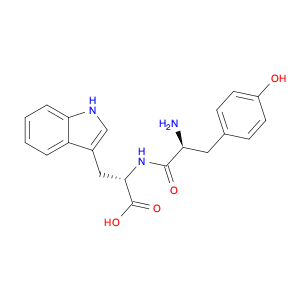
H-Tyr-Trp-OH, also known as Tyrptophan-tyrosine, is a dipeptide composed of the amino acids tyrosine (Tyr) and tryptophan (Trp) linked by a peptide bond. This compound is characterized by its structure, which includes an aromatic side chain from both amino acids, contributing to its hydrophobic properties. The presence of the hydroxyl group in tyrosine enhances its potential for hydrogen bonding, while the indole ring of tryptophan can participate in π-π stacking interactions. H-Tyr-Trp-OH is soluble in water and exhibits a relatively high stability under physiological conditions, making it of interest in biochemical and pharmaceutical applications. It may play a role in neurotransmitter synthesis and has potential implications in neuropharmacology due to the involvement of its constituent amino acids in serotonin and dopamine pathways. Additionally, its CAS number, 60815-41-0, allows for easy identification in chemical databases and literature. Overall, H-Tyr-Trp-OH is a significant compound in the study of peptide chemistry and its biological functions.
Formula:C20H21N3O4
Synonyms:- L-Tryptophan, L-tyrosyl-
- H-TYR-TRP-OH
- YW
Sort by
Purity (%)
0
100
|
0
|
50
|
90
|
95
|
100
Found 3 products.
H-Tyr-Trp-OH
CAS:H-Tyr-Trp-OH is a synthetic, constant ligand for nuclear receptors. It has been shown to be active in the cerebral cortex, with a brain concentration of about 1 µM at steady state. This compound has been shown to be an agonist of the transcription factor nuclear receptor peroxisome proliferator-activated receptor alpha (PPARα) and can be used as a potential therapeutic agent for Alzheimer's disease. H-Tyr-Trp-OH has also been shown to enhance phosphorylation of the microtubule protein tau in cultured cortical neurons, which may have implications for the treatment of Parkinson's disease.Formula:C20H21N3O4Purity:Min. 95%Molecular weight:367.4 g/molH-Tyr-Trp-OH
CAS:Bachem ID: 4000897.
Formula:C20H21N3O4Purity:> 98%Color and Shape:Pink PowderMolecular weight:367.41