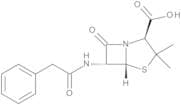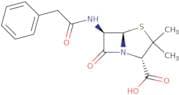
CAS 61-33-6
:Penicillin G
Description:
Penicillin G, also known as benzylpenicillin, is a widely used antibiotic belonging to the penicillin class of drugs. Its chemical formula is C16H18N2O4S, and it features a beta-lactam ring, which is crucial for its antibacterial activity. This compound is effective against a variety of Gram-positive bacteria and some Gram-negative bacteria, making it valuable in treating infections such as pneumonia, meningitis, and syphilis. Penicillin G is typically administered via injection due to its instability in acidic environments, which limits its oral bioavailability. It is characterized by its relatively low toxicity, making it safe for use in humans, although allergic reactions can occur in some individuals. The substance is also sensitive to beta-lactamase enzymes produced by certain bacteria, which can confer resistance. Storage conditions for Penicillin G require protection from light and moisture to maintain its efficacy. Overall, its discovery marked a significant advancement in antibiotic therapy, revolutionizing the treatment of bacterial infections.
Formula:C16H18N2O4S
InChI:InChI=1S/C16H18N2O4S/c1-16(2)12(15(21)22)18-13(20)11(14(18)23-16)17-10(19)8-9-6-4-3-5-7-9/h3-7,11-12,14H,8H2,1-2H3,(H,17,19)(H,21,22)/t11-,12+,14-/m1/s1
InChI key:InChIKey=JGSARLDLIJGVTE-MBNYWOFBSA-N
SMILES:C(O)(=O)[C@@H]1N2[C@@]([C@H](NC(CC3=CC=CC=C3)=O)C2=O)(SC1(C)C)[H]
Synonyms:- (2S,5R,6R)-3,3-Dimethyl-6-(2-(phenylacetylamino)-7-oxo-4-thia-1-azabicyclo[3.2.0]heptane-2-carboxylic acid
- (2S,5R,6R)-3,3-Dimethyl-7-oxo-6-(2-phenylacetamido)-4-thia-1-azabicyclo[3.2.0]heptan-2-carboxylic acid
- (2S,5R,6R)-3,3-Dimethyl-7-oxo-6-[(2-phenylacetyl)amino]-4-thia-1-azabicyclo[3.2.0]heptane-2-carboxylic acid
- (2S,5R,6R)-3,3-dimethyl-7-oxo-6-[(phenylacetyl)amino]-4-thia-1-azabicyclo[3.2.0]heptane-2-carboxylic acid
- (5R,6R)-3,3-dimethyl-7-oxo-6-[(phenylacetyl)amino]-4-thia-1-azabicyclo[3.2.0]heptane-2-carboxylic acid
- (5R,6R)-Benzylpenicillin
- 4-Thia-1-azabicyclo[3.2.0]heptane-2-carboxylic acid, 3,3-dimethyl-7-oxo-6-(2-phenylacetamido)-
- 4-Thia-1-azabicyclo[3.2.0]heptane-2-carboxylic acid, 3,3-dimethyl-7-oxo-6-[(2-phenylacetyl)amino]- (2S,5R,6R)-
- 4-Thia-1-azabicyclo[3.2.0]heptane-2-carboxylic acid, 3,3-dimethyl-7-oxo-6-[(phenylacetyl)amino]- (2S,5R,6R)-
- 4-Thia-1-azabicyclo[3.2.0]heptane-2-carboxylic acid, 3,3-dimethyl-7-oxo-6-[(phenylacetyl)amino]- [2S-(2α,5α,6β)]-
- 6-(2-Phenylacetamido)Penicillanic Acid
- 6-(2-Phenylacetamido)penicillansaure
- Acide 6-(2-Phenylacetamido)Penicillanique
- Acido 6-(2-Fenilacetamido)Penicilanico
- Allpen
- Benzyl-6-aminopenicillinic acid
- Benzylpenicillin G
- Benzylpenicillinic acid
- Cilloral
- Cilopen
- Crysticillin 300 AS
- Dropcillin
- Free benzylpenicillin
- Free penicillin G
- Free penicillin II
- Gelacillin
- Liquacillin
- Nsc 193396
- Penicillin
- Penicillin G
- Penicillin, (phenylmethyl)-
- Penicillinic acid, (phenylmethyl)-
- Pfizerpen
- Pharmacillin
- Phenylacetamidopenicillanic acid
- Phenylacetyl-6-aminopenicillanic acid
- Pradupen
- Specilline G
- See more synonyms
Sort by
Purity (%)
0
100
|
0
|
50
|
90
|
95
|
100
Found 6 products.
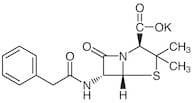
Penicillin G Potassium Salt
CAS:Formula:C16H17KN2O4SPurity:>98.0%(HPLC)(N)Color and Shape:White to Almost white powder to crystalMolecular weight:372.48Penicillin G Sodium Salt
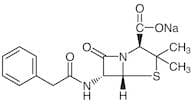
CAS:Formula:C16H17N2NaO4SPurity:>98.0%(HPLC)(N)Color and Shape:White to Almost white powder to crystalMolecular weight:356.37Benzylpenicillin
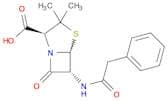
CAS:Benzylpenicillin, a penicillin derivative, treats infections using sodium or potassium salts. Effective against gram-positive bacteria and gram-negative cocci.Formula:C16H18N2O4SPurity:98%Color and Shape:Amorphous White Powder SolidMolecular weight:334.39Benzylpenicillin 1000 µg/mL in Acetonitrile:Water
CAS:Controlled ProductFormula:C16H18N2O4SColor and Shape:Single SolutionMolecular weight:334.39Penicilling
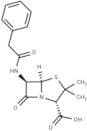
CAS:Penicillin is an antibiotic that inhibits bacterial growth by binding to penicillin-binding proteins, which in turn prevents the bacteria from producing peptidoglycan. Penicillin binds to the enzyme cell wall synthesis and inhibits protein synthesis and cell division. Penicilling can be administered as an intramuscular injection or intravenous injection. The most common adverse reaction is pain at the site of injection, which may be due to toxic epidermal necrolysis. Other adverse reactions include fever, rash, and seizures.
Formula:C16H18N2O4SPurity:Min. 95%Color and Shape:PowderMolecular weight:334.39 g/mol