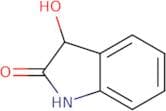
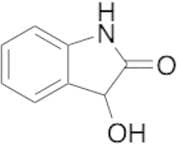
CAS 61-71-2
:Dioxindole
Description:
Dioxindole, with the CAS number 61-71-2, is an organic compound characterized by its bicyclic structure, which includes a fused indole and dioxole moiety. It typically appears as a white to pale yellow solid and is known for its aromatic properties. Dioxindole is soluble in organic solvents such as ethanol and chloroform but has limited solubility in water. This compound is of interest in various fields, including medicinal chemistry, due to its potential biological activities, including anti-inflammatory and analgesic effects. The presence of the dioxole ring contributes to its reactivity, allowing for further chemical modifications. Dioxindole can participate in various chemical reactions, such as electrophilic substitutions and cycloadditions, making it a versatile intermediate in organic synthesis. Safety precautions should be taken when handling this compound, as it may pose health risks if ingested or inhaled. Overall, dioxindole serves as an important building block in the synthesis of more complex organic molecules.
Formula:C8H7NO2
InChI:InChI=1S/C8H7NO2/c10-7-5-3-1-2-4-6(5)9-8(7)11/h1-4,7,10H,(H,9,11)
InChI key:InChIKey=SGZFJWQQBHYNNF-UHFFFAOYSA-N
SMILES:OC1C=2C(NC1=O)=CC=CC2
Synonyms:- 1,3-Dihydro-3-hydroxy-2H-indol-2-one
- 2,3-Dihydro-3-hydroxy-2-oxo-1H-indole
- 2-Indolinone, 3-hydroxy-
- 2H-indol-2-one, 1,3-dihydro-3-hydroxy-
- 3-Hydroxy-1,3-dihydroindol-2-one
- 3-Hydroxy-2,3-dihydro-1H-indol-2-one
- 3-Hydroxy-2-indolinone
- 3-Hydroxyoxindole
- 61-71-2
- Dioxindole
- NSC 26319
- Oxindole, 3-hydroxy-
- See more synonyms
Sort by
Purity (%)
0
100
|
0
|
50
|
90
|
95
|
100
Found 2 products.
3-Hydroxy-2,3-dihydro-1H-indol-2-one
CAS:3-Hydroxy-2,3-dihydro-1H-indol-2-one (3HID) is a heterocyclic compound that contains a trifluoroacetate group. It is an intermediate in the synthesis of histamine, serotonin, and melatonin. 3HID is an inhibitor of the growth factor receptor, which inhibits the proliferation of human liver cells. 3HID also has a strong affinity for basic proteins such as albumin and hemoglobin. These interactions are thought to be important for its cytotoxic activity in cancer cells. 3HID can be synthesized by reacting acetyl chloride with 2-aminobutyric acid in the presence of potassium hydroxide or sodium hydroxide at room temperature, followed by hydrolysis with water. The reaction produces 3HID and acetic acid, which can be removed by distillation. The product can then be purified by recrystallization from methanol orFormula:C8H7NO2Purity:Min. 95%Color and Shape:PowderMolecular weight:149.15 g/molDioxindole
CAS:Controlled ProductApplications 3-Hydroxy-2,3-dihydro-1H-indol-2-one is a useful reagent for the distereoselective preparation of spiro[furo[3,4-c]chromene-1,3'-indoline]triones.
References Lei, C. W., et al.: Org. Biomol. Chem., 18, 845 (2020)Formula:C8H7NO2Color and Shape:NeatMolecular weight:149.147