CAS 610-54-8
:1-Ethoxy-2,4-dinitrobenzene
Description:
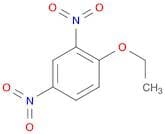
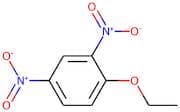
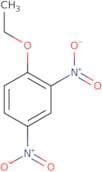
1-Ethoxy-2,4-dinitrobenzene is an organic compound characterized by its aromatic structure, featuring a benzene ring substituted with two nitro groups and an ethoxy group. The presence of the nitro groups, which are strong electron-withdrawing groups, significantly influences the compound's reactivity and properties, making it a potential candidate for various chemical reactions, including electrophilic substitutions. This compound is typically a yellow crystalline solid, indicating its potential use as a dye or pigment. It is moderately soluble in organic solvents but has limited solubility in water due to its hydrophobic ethoxy group. The compound is also known for its potential toxicity and environmental impact, necessitating careful handling and disposal. In terms of applications, 1-ethoxy-2,4-dinitrobenzene may be utilized in synthetic organic chemistry, particularly in the development of pharmaceuticals or agrochemicals. As with many nitro compounds, it may also exhibit explosive properties under certain conditions, highlighting the importance of understanding its stability and reactivity in various environments.
Formula:C8H8N2O5
InChI:InChI=1S/C8H8N2O5/c1-2-15-8-4-3-6(9(11)12)5-7(8)10(13)14/h3-5H,2H2,1H3
InChI key:InChIKey=YSOKMOXAGMIZFZ-UHFFFAOYSA-N
SMILES:N(=O)(=O)C1=C(OCC)C=CC(N(=O)=O)=C1
Synonyms:- 1,3-Dinitro-4-ethoxybenzene
- 1-Ethoxy-2,4-dinitrobenzene
- 2,4-Dinitro-1-ethoxybenzene
- 2,4-Dinitrofenetol
- 2,4-Dinitrofenetol [Czech]
- 2,4-Dinitrophenyl ethyl ether
- Ai3-00707
- Benzene, 1-ethoxy-2,4-dinitro-
- Brn 1884582
- Nsc 6227
- Phenetole, 2,4-dinitro-
- See more synonyms
Sort by
Purity (%)
0
100
|
0
|
50
|
90
|
95
|
100
Found 4 products.
2,4-Dinitrophenetole
CAS:2,4-Dinitrophenetole is a nucleophilic compound that reacts with the hydrogen bond of an acid. It is a thermodynamic and kinetic acid which reacts with bile acids in the second order. The rate enhancement of 2,4-dinitrophenetole is due to its uncoupling effect on hepg2 cells. This chemical has been shown to react faster with picric acid than with nitric acid solutions.
Formula:C8H8N2O5Purity:Min. 95%Color and Shape:PowderMolecular weight:212.16 g/mol