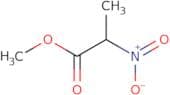
CAS 6118-50-9
:Methyl 2-nitropropanoate
Description:
Methyl 2-nitropropanoate is an organic compound characterized by its ester functional group and a nitro substituent. It is typically a colorless to pale yellow liquid with a fruity odor, indicative of its ester nature. The compound features a propanoate backbone, where a nitro group is attached to the second carbon of the propanoate chain, contributing to its reactivity and potential applications in organic synthesis. Methyl 2-nitropropanoate is soluble in organic solvents, such as ethanol and ether, but has limited solubility in water due to its hydrophobic ester group. It is often used as an intermediate in the synthesis of pharmaceuticals and agrochemicals. The presence of the nitro group can also impart unique properties, such as increased electrophilicity, making it useful in various chemical reactions, including nucleophilic substitutions and reductions. As with many nitro compounds, it should be handled with care due to potential toxicity and environmental concerns. Proper safety measures, including the use of personal protective equipment, are recommended when working with this substance.
Formula:C4H7NO4
InChI:InChI=1S/C4H7NO4/c1-3(5(7)8)4(6)9-2/h3H,1-2H3
InChI key:InChIKey=UHXOPEVCNMQIAA-UHFFFAOYSA-N
SMILES:C(C(OC)=O)(N(=O)=O)C
Synonyms:- Methyl 2-nitropropionate
- Propanoic acid, 2-nitro-, methyl ester
- Methyl 2-nitropropanoate
- Propionic acid, 2-nitro-, methyl ester
Sort by
Purity (%)
0
100
|
0
|
50
|
90
|
95
|
100
Found 1 products.
Methyl 2-nitropropanoate
CAS:<p>Methyl 2-nitropropanoate is a reactive compound that is used as an epigenetic marker. It reacts with lysine residues in proteins and histones, resulting in the methylation of these proteins. Methyl 2-nitropropanoate has been shown to inhibit the replication of DNA and induce cellular apoptosis in mammalian cells. The effector proteins H3K9me2 and H4K5me1 are involved in epigenetic changes that include gene silencing and histone demethylation. Methyl 2-nitropropanoate can also cause clastogenic effects by forming adducts on dna replication enzymes, such as amide and demethylation. Histone lysines are methylated by methyl 2-nitropropanoate, which causes histones to condense into tight bundles of DNA that contribute to the formation of actin filaments.</p>Formula:C4H7NO4Purity:Min. 95%Molecular weight:133.1 g/mol