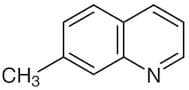
CAS 612-60-2
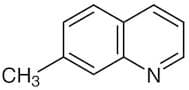
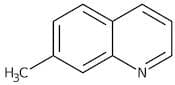
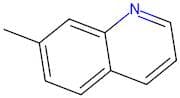
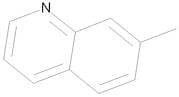
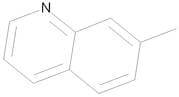
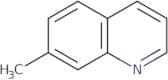
:7-Methylquinoline
- Ai3-00850
- Brn 0110317
- Ccris 2895
- Nsc 65665
- Quinoline, 7-methyl-
- m-Toluquinoline
- 5-20-07-00402 (Beilstein Handbook Reference)
- 7-Methylquinoline
- 7-METHYLQUINOLINE, (CONTAINS-20% 5-FORM) 75+%
- 7-Methylquinoline,97%
- Quinolinol,7-methyl-
- 7-METHYLQUINOLINE: TECH., 70%
- 7-methyquinoline
- 7-Methylquinoline (contains-25% 5-form)
- 7-Methylquinoline, tech. 70%, remainder mainly 5-isomer
- 7-methyl-quinolin
- 7-Methylquinolinol
- 7-Methylquinoline,tech.70%
- 7-Methylquiuoline
- See more synonyms
7-Methylquinoline (contains 25% 5-form at maximum)
CAS:Formula:C10H9NPurity:>75.0%(GC)Color and Shape:Colorless to Light orange to Yellow clear liquidMolecular weight:143.197-Methylquinoline
CAS:Formula:C10H9NPurity:>98.0%(GC)Color and Shape:White or Colorless to Almost white or Almost colorless powder to lump to clear liquidMolecular weight:143.197-Methylquinoline, 97%
CAS:7-methylquinoline has been bioassayed as tumor initiator on the skin of Sencar mice. This Thermo Scientific Chemicals brand product was originally part of the Alfa Aesar product portfolio. Some documentation and label information may refer to the legacy brand. The original Alfa Aesar product / itemFormula:C10H9NPurity:97%Color and Shape:Pale yellow, Low melting solid / liquidMolecular weight:143.197-Methylquinoline
CAS:7-MethylquinolineFormula:C10H9NPurity:97%Color and Shape: brown low melting solidMolecular weight:143.19g/molm-Toluquinoline
CAS:Controlled ProductApplications m-Toluquinoline is a reagent used in the preparation of diarylmethylpiperazines as potent opioid receptor agonists with improved side effects. Also used in the preparation of novel pyrazine compounds derived from 2-phenylquinolin-7-yl which act as potent insulin-like growth factor-I receptor inhibitors.
References Plobeck, N. et al.: J. Med. Chem., 43, 3878 (2000); Mulvihill, M. et al.: Bioorg Med. Chem. Lett., 16, 1359 (2008);Formula:C10H9NColor and Shape:Off-WhiteMolecular weight:143.1857-Methylquinoline
CAS:7-Methylquinoline is an organic compound that can be used to synthesize antimalarial drugs. It is a quinoline derivative with a methyl group at the 7th position. The structure of 7-methylquinoline contains a nitrogen atom and hydrogen atoms, which are bonded to fluorine, chlorine, and bromine atoms. This molecule has been shown to be stable in the presence of Friedel-Crafts catalysts and chloride ions. The reaction mechanism for 7-methylquinoline is intramolecular hydrogen transfer from the chloroform molecule to the quinoline ring system. The formation rate for this compound is slow because it requires two steps: nucleophilic substitution and electrophilic addition reactions.
Formula:C10H9NPurity:Min. 95%Molecular weight:143.19 g/mol