CAS 61285-29-8
:2-Thiophenecarboxylic acid, 3-bromo-5-methyl-
Description:
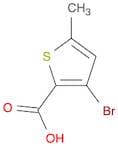
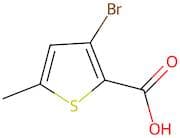
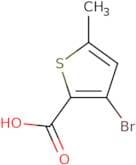
2-Thiophenecarboxylic acid, 3-bromo-5-methyl- is an organic compound characterized by a thiophene ring, which is a five-membered aromatic heterocycle containing sulfur. This compound features a carboxylic acid functional group (-COOH) attached to the thiophene ring, along with a bromine atom at the 3-position and a methyl group at the 5-position. The presence of these substituents influences its chemical reactivity and physical properties, such as solubility and boiling point. Typically, compounds like this exhibit moderate polarity due to the carboxylic acid group, which can participate in hydrogen bonding. The bromine substituent can enhance the compound's reactivity in electrophilic aromatic substitution reactions. Additionally, the methyl group can affect steric hindrance and electronic properties. This compound may find applications in organic synthesis, pharmaceuticals, or as an intermediate in the preparation of other chemical entities. As with many thiophene derivatives, it may also exhibit interesting biological activities, warranting further investigation.
Formula:C6H5BrO2S
Sort by
Purity (%)
0
100
|
0
|
50
|
90
|
95
|
100
Found 4 products.
2-Thiophenecarboxylic acid, 3-bromo-5-methyl-
CAS:Formula:C6H5BrO2SPurity:98%Color and Shape:SolidMolecular weight:221.07173-Bromo-5-methylthiophene-2-carboxylic acid
CAS:3-Bromo-5-methylthiophene-2-carboxylic acidPurity:98%Molecular weight:221.07g/mol3-bromo-5-methylthiophene-2-carboxylic acid
CAS:3-Bromo-5-methylthiophene-2-carboxylic acid (3BMT) is a drug that inhibits the enzyme succinate dehydrogenase. Succinate dehydrogenase is an enzyme that catalyzes the conversion of succinate to fumarate in the citric acid cycle, which is a series of biochemical reactions in cellular respiration. 3BMT prevents the formation of acetyl coenzyme A, which is needed for the production of energy in cells. This drug also has a pyrrole moiety that can be oxidized by difluoromethylating it and then reacting with pyrrole to form 2,4-dichloropyrimidine. 3BMT has been shown to inhibit carboxamides such as L-aspartate oxidase and glutamate decarboxylase.
Formula:C6H5BrO2SPurity:Min. 95%Molecular weight:221.1 g/molRef: 3D-LCA28529
Discontinued product